28 Jan 2026

Hydraulic Home Elevators—The Better Choice for Home Use

Hydraulic home elevators are becoming a more popular choice for homeowners of 2-story and 3-story homes.

With their simple structural and price advantages, they precisely meet the basic needs of daily home use, making them very friendly and convenient for the elderly.


Mainly advantages as following:

  1. Hydraulic home lifts require only 6.5 feet to7.5 feet of overhead height and no need for a pit, highly suitable for retrofitting existing buildings or rooms with limited space.
  2. Without machine room: The drive motor can be flexibly placed within 15 feet of the elevator body, ideal for irregular spaces like staircase corners or living room nooks.
  3. Smaller Footprint : Minimum installation space just 39×39 inches, leaving you more living space.
  4. Super Silent: Operating noise is just around 50 dB, comparable to an air conditioner, making them more friendly to the elderly and babies.
  5. Cost-effective, meeting the budget of most household owners. Standard configurations cost range from $5,000 to $10,000.
  6. Easier installation: The elevator was designed and built in an easy-install module, normal skilled workers can finish it easily based on our installation video.

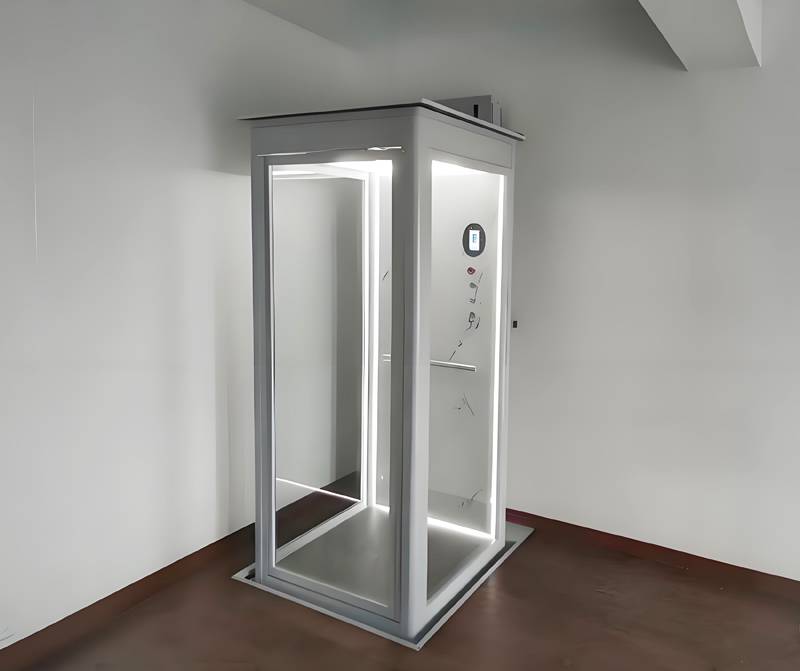
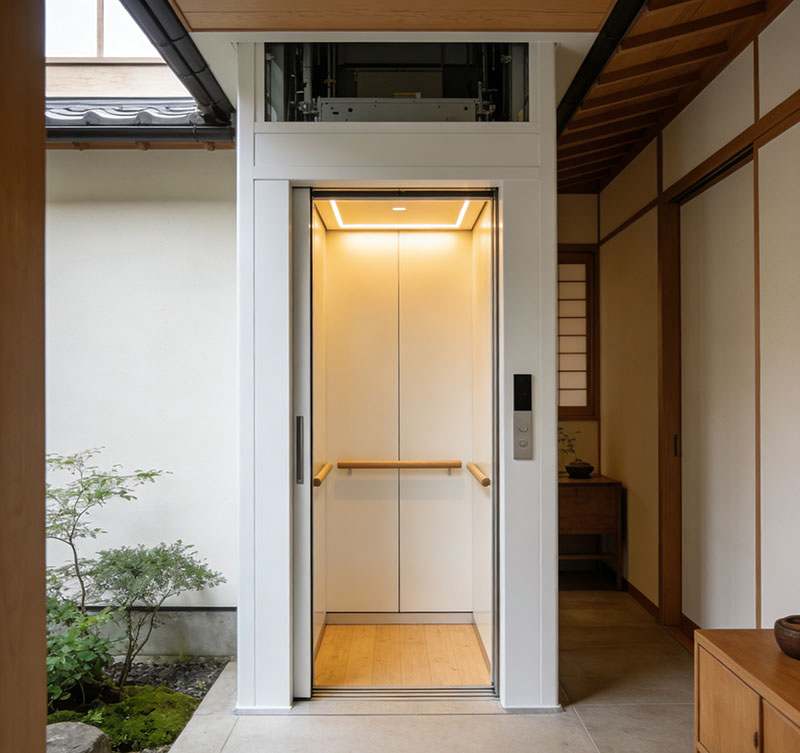
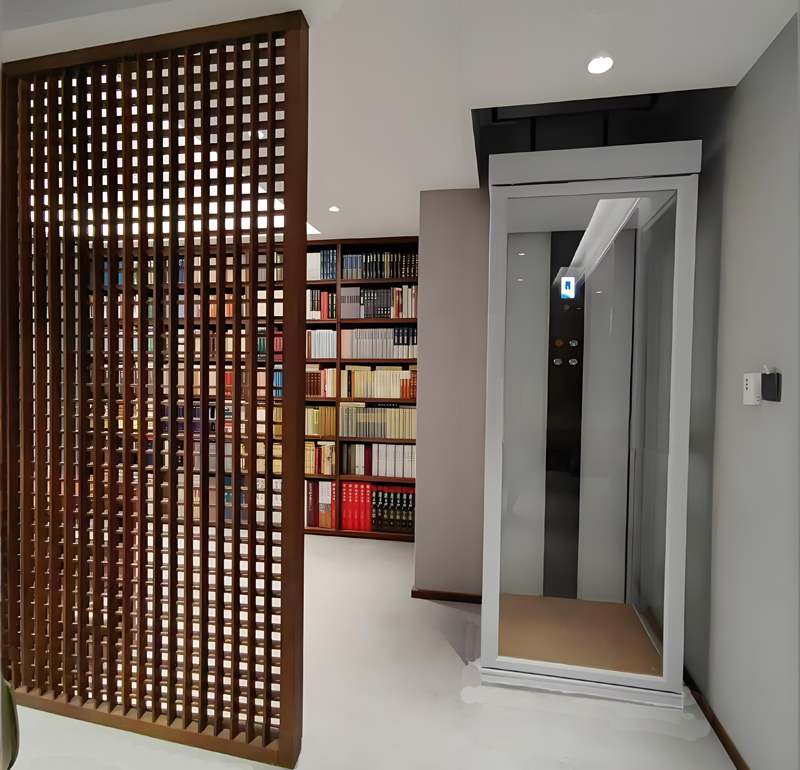
a white home elevator lift installed inside a modern room with wooden floor.

Modern hydraulic home elevators have multiple safety devices, including:

  • – Relief valves prevent excessive pressure during upward travel.
  • – Line rupture valves automatically shut off hydraulic lines in case of accidental pipe damage, preventing uncontrolled descent.
  • – Manual lowering valves allow mechanical control to slowly lower the car to the nearest floor during power outages or malfunctions, enabling self-rescue.
  • – Battery Back-Up System: If there is a power cut while using the elevator, it can be driven to the lower level of the home and will then wait until the    power comes back on to resume normal service.
  • – Cabin door lock system, elevator can’t moves if cabin door is not closed.
  • – Insided T-Rail as the moving structure. More stable and smoother.

Interested in an affordable hydraulic home elevator? Contact us for a details quote. 
(We will reply you within 24 hours)


Share this
10 Jan 2026

Introducing a Skystair home elevator for small space

In modern homes, install a compact residential elevator is a popular choice. These are commonly referred as”Machine Room-Less Elevator / MRL Elevator”

a white home elevator lift installed inside a modern room with wooden floor.

Below is a recommended residential home elevator specifically designed for small spaces, for your consideration.

  1. Minimum installation space: Approximately 31.5 inches x 39.4 inches;
  2. Load capacity: Typically 660 lbs;
  3. Installation Locations:
  • Mid-staircase: The most common installation spot, requiring precise measurement of the clear space at the staircase turn.
  • Wall-mounted corner: Utilizes a room corner or the end of a hallway.
  • Existing shaft: For retrofitting older buildings, installation within a narrow existing shaft is possible. Professional measurement is needed.

Features:

Pit requirement: No pit required.

Headroom requirement: ≥ 6.5 feet.

Advantages: Lower cost, simple installation/maintenance, smooth operation, extremely low noise.

Parameter Explanation:

  • Minimum Installation Space: Space required to accommodate elevator components such as guide rails, brackets, and car. Equivalent to the reserved structural floor opening dimensions.

Example: For an elevator with a cabin interior of 29 inches x 26 inches, the required floor opening in your home should be at least 34.5 inches x 41.7 inches.

  • Pit Depth: The depth required to excavate below ground level. Hydraulic driving elevators may not require a pit.
  • Overhead space: The distance from the car top to the shaft top when the elevator stops at the highest floor. Must meet the minimum height specified by the elevator manufacturer to ensure safe maintenance space.

Typically requires ≥ 2000mm.

  • Machine Room: Above type elevator is machine-room-less designs. Control cabinets can usually be installed beside the elevator or in nearby spaces (e.g., under stairs, storage rooms). Confirm the location with the supplier in advance.

home elevator control cabinet

  • Power Source: local AC electricity, such as 220v/240v, 50/60hz, single phase.  Max 14A current.

Hope this information helps you build a perfect elevator!

Interested in a home elevator for small space? Contact us for a free consultation!

(We will reply you within 24 hours)

Share this
09 Jan 2026

What are the common problems on home lifts?

Home elevators, as a frequently used vertical transportation equipment within residences, are designed for safety and reliability. However, common malfunctions may still occur during prolonged use. Below is a systematic overview of these issues along with corresponding inspection and troubleshooting methods:

Common Malfunction Types and Troubleshooting:

1. Door Safety Switch Failure (Most Common)

  • Symptom: Elevator still moves if the cabin door not closed (safety circuit failure).

Potential Reasons:

  • Elevator door safety switches are damaged or short circult.

2. Abnormal Operation

  • Symptom: Vibration or unusual noises during operation, inaccurate leveling (platform stops height not at same level with landing floor surface), suddenly stops.

Troubleshooting:

  • Insufficient guide rail lubrication, oil contamination, or installation inaccuracies.
  • Unstable traction machine or hydraulic system operation.
  • Uneven tension or wear in steel ropes.
  • Abnormal parameters in the frequency converter or control system.
  • Leveling sensor switch is not on correct place.

home elevator floor call buttons inside the car

3. Electrical Control System Malfunctions

  • Symptoms: Button failure (no response to call buttons inside/outside), incorrect floor display or blank screen, lighting malfunction, elevator automatically returning to base station or random floor selection.

home elevator floor call panels.

Troubleshooting:

  • Aged or damaged components on control boards or circuit boards.
  • Poor contact or damage to buttons.
  • Loose, damp, or shorted wiring connections.
  • External power outage or circuit breaker trip.

4. Safety Protection Device Activated.

  • Failure Symptoms: Elevator suddenly stops and cannot operate.

Troubleshooting:

  • Safety gear activated: When elevator speed abnormally increases, mechanical safety devices activate, clamping the car against the guide rails.
  • Pit/roof emergency stop switch activated: the stop switch may failure to reset after maintenance.

home elevator stop button

What should we do? 

1. Emergency Response Principles:

  • Stay Calm: Elevator stoppages are typically triggered by safety mechanisms, and the car still safety for user.
  • Use Emergency Devices: Try to contact and get outside assistance—this is the safest and most effective method for summoning help.
  • Await Rescue: Don’t forced open car doors or attempt escape through the top, as this risks falling or being crushed. Patiently await professional rescue personnel.

If Trapped: Family members should immediately press the emergency descent button (located on the main control panel) to lower the car to the lowest floor.

2. Daily Use and Preventive Maintenance:

  • Proper Usage: Avoid overloading, slamming doors, jumping inside the car, or obstructing door closure for extended periods.
  • Maintain Cleanliness: Regularly clean the car interior and door sills to prevent dust and debris from entering crevices.
  • Regular Maintenance: Periodically inspect all components of the home elevator. Check for cracks in the drive belt, loose nuts, proper lubrication of guide rails, and ensure all control system contactors are functioning correctly.
  • Monitor Abnormalities: Immediately notify maintenance personnel upon detecting minor anomalies such as unusual noises, vibrations, or inaccurate leveling to prevent potential issues.
  • Power Supply Assurance: Ensure stable household electricity supply. Consider disconnecting power during extended absences, but verify the elevator passes self-check after power restoration.

Interested in a home lifts quote? Contact us for a free consultation!

(We will reply you within 24 hours)

Share this
03 Jan 2026

China’s Affordable Home Elevators: The Mystery Behind Their Cost Advantage and High Quality

Recent years, a growing number of global consumers have noticed a striking phenomenon: Chinese home elevators maintain excellent quality while priced significantly lower than comparable foreign products. 


Where does this remarkable cost advantage originate? Let’s delve into the key factors behind it.

Full Industrial Chain Advantage: The Cornerstone of Made in China
The greatest strength of China’s home elevator industry lies in its comprehensive supply chain system. From the Yangtze River Delta to the Pearl River Delta, China hosts the world’s most concentrated elevator component clusters—spanning motors, guide rails, and control systems. This means:

  • Over 90% of components can be sourced domestically
  • Suppliers are highly centralized, drastically reducing logistics and communication costs
  • Rapid response to market demands shortens product iteration cycles

This “one-hour supply chain circle” model leaves European manufacturers in the dust.

Scaled Production: The Art of Cost Allocation
China is the world’s largest elevator producer and consumer, manufacturing over 1 million units annually and commanding more than 70% of the global market share. This scale generates:

  • Fixed costs diluted by massive output
  • Highly specialized production lines boosting efficiency by 30-50%
  • Stronger bargaining power through bulk procurement

Technological Innovation and Local Adaptation
Contrary to common perception, Chinese elevator companies do not rely solely on low-price competition. In fact, they achieve cost optimization through targeted technological innovation:

  • Developing compact, low-floor station solutions tailored to Asian residential characteristics;
  • In-house development of control systems, reducing reliance on expensive imported cores;
  • Modular design simplifying installation processes and lowering on-site construction costs;

Labor and Operational Efficiency
While wages in China’s manufacturing sector are rising, it maintains a relative cost advantage in specialized engineers and skilled workers. More significantly:

  • Highly skilled engineering teams command salaries at 40-60% of European/American rates
  • Installation teams are localized, familiar with domestic construction environments
  • Industry-wide digital transformation enhances management efficiency

Policy Support and Market Environment
Government strategies like ”Made in China 2025”provide robust backing for high-end equipment manufacturing:

  • Tax incentives for R&D investment
  • Subsidies for smart manufacturing upgrades
  • Policy orientation encouraging domestic substitution

Simultaneously, intense domestic market competition drives enterprises to continuously optimize cost structures, propelling overall industry advancement.
Quality and Safety: Non-negotiable Foundations
It bears emphasizing that low cost does not equate to low quality. China’s home elevator enterprises:

  1. Comprehensively adopt international safety standards (EN81, ASME, etc.)
  2. Obtain international certifications like CE and TÜV
  3. Establish robust after-sales maintenance systems
  4. Some companies even serve as ODM manufacturers for European brands

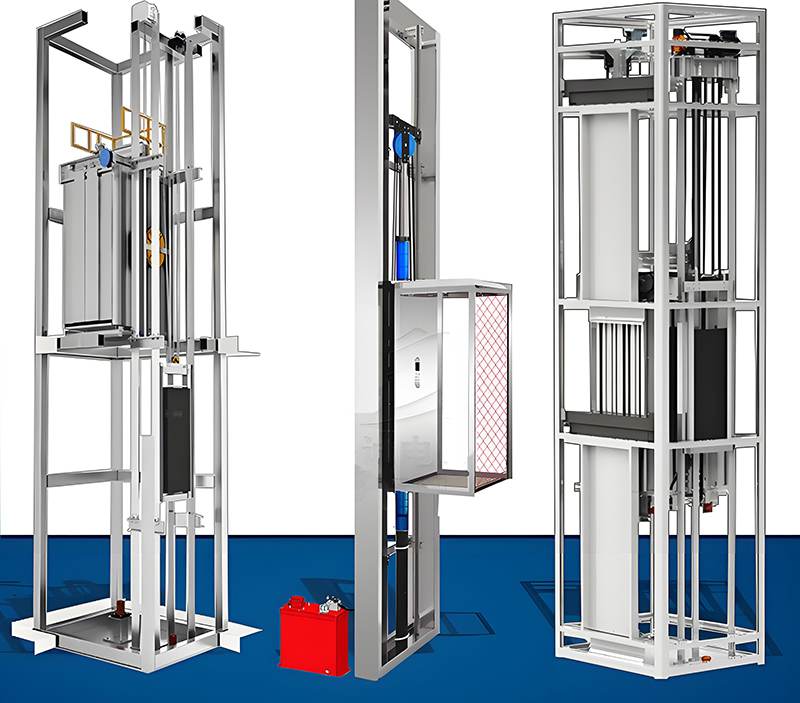
Home Elevator Lift

China’s Choice in a Global Context
Today, Chinese home elevators not only dominate the domestic market but also export to Europe, Southeast Asia, the Middle East, and beyond. International clients’ choices confirm:
– Significant cost-performance advantage: 30-50% lower pricing for comparable configurations
– Strong customization capabilities: Rapid response to special dimensions and functional requirements
– Short delivery cycles: 40% reduced time from order placement to installation completion
Future Outlook
With the integration of artificial intelligence and IoT technologies, China’s affordable home elevators are advancing toward intelligent and energy-efficient solutions. The combination of cost advantages and technological upgrades will enhance the competitiveness of Chinese manufacturing in the global marketplace.

Choosing Chinese home elevators is not only an economically sound decision but also a strategic alignment with the evolving landscape of global manufacturing. Striking the optimal balance between quality and cost represents the unique value Chinese manufacturing delivers to consumers worldwide.

Interested in a affordable home elevator lift? Contact us for a free consultation!

(We will reply you within 24 hours)

Share this
19 Dec 2025

Freight Elevator: Heavy-Duty Vertical Transportation for Industrial Buildings

A Freight Elevator is a vertical transportation system specifically designed to move heavy goods, equipment, and pallets between floors. Unlike passenger elevators, freight elevators focus on durability, load capacity, and operational efficiency in industrial and commercial environments.

What Is a Freight Elevator?

A freight elevator is an industrial lift engineered to transport large and heavy loads safely. It is commonly installed in factories, warehouses, logistics centers, shopping malls, and industrial buildings where efficient vertical material transport is required.

Types of Freight Elevators

There are several common types of freight elevators:

  • Hydraulic freight elevators – Ideal for low-rise buildings with heavy loads

  • Traction freight elevators – Suitable for multi-floor buildings with higher speed requirements

  • Machine-room-less (MRL) freight elevators – Space-saving design with modern technology

Each type offers different advantages depending on building structure and load demands.

Key Features of Freight Elevators

  • High load capacity (1–10 tons or more)

  • Strong steel cabin and reinforced guide rails

  • Stable and safe operation

  • Wide doors for pallet and forklift access

  • Advanced safety systems, including limit switches and emergency brakes

Applications of Freight Elevators

Freight elevators are widely used in:

  • Manufacturing facilities

  • Warehouses and logistics hubs

  • Industrial parks

  • Shopping malls and supermarkets

  • Automotive and machinery plants

They enable efficient transportation of raw materials, finished products, and heavy equipment between floors.

Benefits of Installing a Freight Elevator

  • Improved logistics efficiency

  • Reduced labor and handling time

  • Enhanced safety for goods and operators

  • Customizable design for different building requirements

How to Choose the Right Freight Elevator

When selecting a freight elevator, consider load capacity, lifting height, building structure, door size, power supply, and safety standards. Professional installation and regular maintenance are also critical for long-term performance.

Share this
19 Dec 2025

Scissor Lift Table: A Reliable Solution for Efficient Material Handling

A Scissor Lift Table is an essential piece of material handling equipment widely used in manufacturing, warehousing, logistics, and assembly lines. Designed to lift heavy loads vertically, scissor lift tables improve workplace efficiency, safety, and ergonomics by reducing manual lifting and repetitive strain.

What Is a Scissor Lift Table?

A scissor lift table is a lifting platform supported by crossed metal arms (scissor mechanism) that expand and contract to raise or lower loads. It is commonly powered by hydraulic, electric, or manual systems and can handle loads ranging from a few hundred kilograms to several tons.

Key Features of Scissor Lift Tables

  • High load capacity for industrial applications

  • Smooth vertical lifting with stable structure

  • Hydraulic or electric drive options

  • Customizable platform size and lifting height

  • Safety features such as overload protection and emergency stop

These features make scissor lift tables ideal for improving productivity while ensuring operator safety.

Applications of Scissor Lift Tables

Scissor lift tables are widely used in various industries, including:

  • Manufacturing plants

  • Warehouses and distribution centers

  • Automotive workshops

  • Assembly lines

  • Packaging and palletizing operations

They are commonly used for loading and unloading goods, positioning materials at an ergonomic working height, and integrating with conveyor systems.

Benefits of Using a Scissor Lift Table

Using a scissor lift table offers multiple advantages:

  • Improved workplace safety by reducing manual lifting

  • Increased efficiency in material handling processes

  • Reduced labor costs and operator fatigue

  • Flexible installation for different industrial environments

Choosing the Right Scissor Lift Table

When selecting a scissor lift table, consider factors such as load capacity, lifting height, platform size, power type, and usage frequency. Custom-built scissor lift tables are also available to meet specific operational requirements.

Share this
14 Dec 2025

Home Elevator Company — A Practical Guide for Customers and Business Owners

Installing a residential elevator is more than a convenience — for many families it’s a safety and accessibility upgrade that enables “aging in place,” increases resale appeal, and opens new markets for contractors and elevator companies. This guide explains what home elevator companies offer, realistic cost ranges, regulatory and permitting essentials, market context, and a checklist to help customers and business owners make smart decisions.

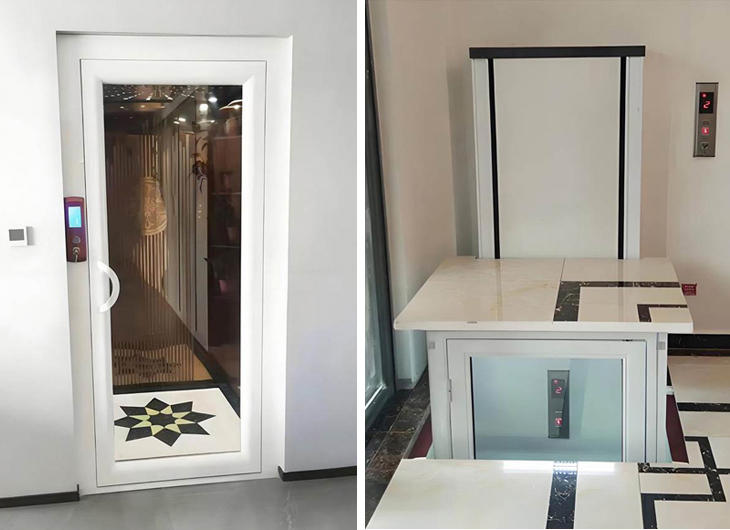
2 home elevators in different color

What a home elevator company does

A professional home elevator company typically handles one or more of the following services:

  • Site assessment and feasibility (structural requirements, shaft vs. shaftless, ceiling heights).

  • Product selection and customization (cab finishes, load capacity, travel distance).

  • Permits, code compliance and inspections.

  • Delivery, installation, testing and commissioning.

  • Ongoing maintenance and emergency service plans.

Some companies focus only on sales and installation for specific product lines; others provide full-service design, structural work, and maintenance contracts.

Typical costs (real-world ranges)

Home elevator cost varies widely by type (shafted, shaftless, pneumatic, stair-climbing lift), number of stops, cab finishes, and local labor/permit fees. Popular home-contractor aggregators report typical installed ranges from roughly $2,700 to $6,000 for small pneumatic or through-floor residential lifts up to $25,000–$60,000+ for higher-end shafted systems with multiple stops and custom finishes. Always get multiple written quotes that include permits and site work. Home Advisor

Regulations, standards and permits — what companies must know

Residential elevators must meet recognized safety and accessibility codes. The U.S. Access Board and related guidance reference compliance with the ASME safety codes (A17.1/A18.1 for elevators and platform lifts), and many local jurisdictions require plan review and inspections prior to operation. Home elevator companies should be able to point to the specific code editions used for their installations and to handle local permit submittals. U.S. Access Board

Permit fees and inspection schedules vary by state and municipality. Some jurisdictions publish fee schedules for elevator plan review and inspections — these can add several hundred to a few thousand dollars to project costs and can affect lead time.  Commonwealth of Pennsylvania

Why residential elevators matter for aging in place and public policy

Home modifications — including lifts and elevators — are repeatedly recommended in aging-in-place research as effective measures to maintain independence and reduce caregiver burden. Local aging services, university research, and advocacy groups encourage planning for vertical accessibility as part of long-term housing strategies. For homeowners, emphasizing the functional and safety benefits (not just luxury) helps your content resonate with searchers who are looking for solutions for older adults. AAP Labs+1

Market context (useful for companies and marketers)

The residential elevator segment is expanding rapidly as populations age and as multi-level home designs and retrofit solutions gain acceptance. Recent industry reports estimate significant market growth (multi-billion-dollar global market projections), driven by aging demographics, home renovation demand, and improved product affordability. Including up-to-date market numbers and citeable reports in service pages and investor-facing content helps establish authority. Fortune Business Insights


How customers should pick a home elevator company (practical checklist)

  1. Ask for local references and photos — installed projects in similar homes.

  2. Verify certifications and code familiarity — have they installed to ASME A17.1/A18.1 or local code? Ask which edition they follow.  U.S. Access Board

  3. Get itemized quotes — separate product, structural work, electrical, permitting, and inspections.

  4. Confirm warranty & maintenance — get details for parts, labor, and emergency service response.

  5. Confirm permitting — ensure the company pulls permits and schedules inspections (local fees may apply).  Commonwealth of Pennsylvania

  6. Check insurance and bonding — contractor liability and workers’ comp are must-haves.

Share this
10 Dec 2025

DIY Home Elevator Costs and Methods: What Homeowners Should Know

Home elevators have become increasingly common as homeowners look for ways to improve accessibility, aging-in-place comfort, and property value. As traditional residential elevators can be expensive, some homeowners begin researching DIY home elevator options in hopes of cutting costs.


However, building a home elevator yourself—especially one intended to lift people—comes with serious safety, code-compliance, and liability concerns. This article explores what “DIY home elevators”realistically mean, the true costs involved, safer alternatives, and the methods people typically consider when trying to reduce expenses.

Our goal is to help you understand your options in a practical and safe way, while following up-to-date Google-compliant content guidelines.

Watch The Home Elevator DIY Feedback Video From  Customer

What “DIY Home Elevator” Really Means

When people search for “DIY home elevator” they may imagine building a complete elevator system from scratch. In reality, constructing a person-lifting device without professional engineering is unsafe and typically illegal, as most countries require elevators to meet strict safety and building-code standards.

So, in the residential market, a “DIY home elevator” typically refers to:

  1. Partial DIY installation
    Homeowners perform non-technical tasks (such as minor carpentry, finishing work, or preparing the space) while licensed professionals install the elevator machinery.

  2. Pre-engineered lift kits
    These are rare for people-carrying devices but more common for cargo lifts or dumbwaiters. Some homeowners attempt to repurpose them, but this is not recommended.

  3. Alternative devices
    Such as stair lifts, vertical platform lifts (VPLs), or shaftless elevators, which often require less construction and may support limited DIY participation.

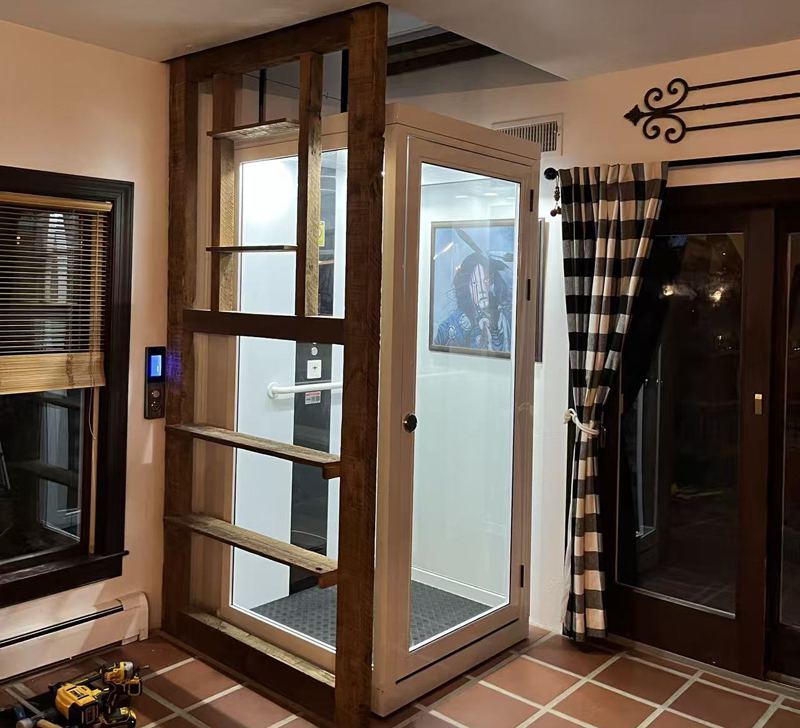
a white shaftless home lift with glass panel

Understanding these distinctions helps set realistic expectations for cost and feasibility.


Cost Breakdown: DIY vs. Professionally Installed Home Elevators

Because residential elevators must meet safety requirements, fully DIY builds are not feasible. But semi-DIY projects—where you handle preparation work and hire pros for installation—can reduce costs by 10–25%.

Below is an overview of typical price ranges in the U.S.:

1. Traditional Shafted Home Elevator

  • Professionally installed: $25,000–$60,000+

  • Semi-DIY (home prep only): $20,000–$50,000

  • Major cost drivers:

    • Shaft construction

    • Machine room requirements (for some models)

    • Electrical upgrades

    • Permits and inspections

2. Shaftless Home Elevator (most common for DIY-minded homeowners)

  • Professionally installed: $18,000–$35,000

  • Semi-DIY: $5,000–$10,000

  • These models require minimal structural changes, making them appealing to DIY audiences.

3. Pneumatic Vacuum Elevators (PVE)

  • Installed cost: $35,000–$60,000

  • Semi-DIY savings: limited—most manufacturers require certified installation

  • No shaft or machine room required

4. Vertical Platform Lifts (VPLs)

  • Cost: $3,000–$5,000

  • Typically used for wheelchair access and often easier for homeowners to prepare the site for


a white home elevator lift installed inside a modern room with wooden floor.

If You Want a DIY-Friendly Approach, Consider These Methods

1. DIY the Preparation Work (Safest Method)

You can reduce elevator costs by performing or hiring cheaper labor for:

  • Framing or drywall demolition

  • Creating the opening between floors

  • Clearing electrical pathways (done by a licensed electrician)

  • Building or reinforcing the shaft according to engineered drawings

This approach can save 10–25% of total project cost while keeping all safety-critical components professionally handled.


2. Choose a Shaftless Home Elevator (Minimal Construction Required)

Shaftless elevators are compact and usually travel one floor. They require:

  • A floor cutout

  • Basic structural reinforcement

  • Standard household electrical supply

This is the #1 option homeowners choose when seeking something “DIY-friendly” without compromising safety.


3. Install a VPL (Vertical Platform Lift)

Although not classified as elevators, VPLs are:

  • Simpler mechanically

  • Often installed in garages or exterior settings

  • Less expensive

  • Easier for homeowners to prepare the site for

For wheelchair users, a VPL offers functionality at a fraction of the cost.


Hidden Costs DIY Home Elevator Shoppers Often Overlook

Even if you attempt partial DIY, these costs still apply:

1. Permits and Inspections

Local authorities typically require:

  • Structural plans

  • Electrical permits

  • Elevator operation permits

  • Final inspection before use

Budget $500–$3,500 depending on region.


2. Electrical and Structural Modifications

Expect expenses for:

  • Dedicated circuits

  • Load-bearing reinforcement

  • Cutouts for shaft or floor openings

Typical cost: $1,500–$10,000 depending on home structure.


3. Maintenance Requirements

Most residential elevators require:

  • Annual or bi-annual service

  • Safety tests

  • Replacement parts over time

Budget $300–$800 per year.


So, How Much Does a DIY-Style Home Elevator Really Cost?

Here is a realistic total range including partial DIY work:

Elevator Type Typical Total Cost (Semi-DIY)
Shaftless elevator $5,000–$10,000
Traditional shaft elevator $20,000–$50,000
VPL $3,000–$5,000
Pneumatic elevator $35,000–$55,000

These numbers represent safe, legal installation pathways while still allowing homeowners to reduce some expenses.


Final Thoughts: DIY Home Elevators Require Caution—but Cost Savings Are Still Possible

DIY-minded homeowners can absolutely save money when installing a home elevator—as long as DIY involvement is limited to non-technical tasks. The mechanical and electrical components must be installed by licensed professionals to meet safety codes and pass inspections.

The best options for homeowners looking to reduce costs without compromising safety include:

  • Choosing shaftless elevators

  • Preparing the construction site yourself

  • Considering vertical platform lifts or stair lifts as alternatives

By understanding the realistic costs and safe methods, you can make an informed decision and find the most affordable, code-compliant elevator solution for your home.


Interested in DIY a shaftless home elevator quote? Contact us for a free consultation!

(We will reply you within 24 hours)

Share this
05 Dec 2025
02 Dec 2025

How much does a shaftless elevator cost?

How much does a shaftless elevator cost? — A practical, friendly guide

If you’re considering adding a shaftless home elevator (also called a home lift or shaft-less residential lift), cost is one of the first — and trickiest — questions. Unlike full-shaft traction or hydraulic elevators, shaftless lifts are engineered to be compact, easier to install, and often less expensive. Below is a clear, searchable explanation of typical price ranges, what drives cost, code and permit considerations, and realistic budgeting advice — with links to reputable government, university, and industry sources.

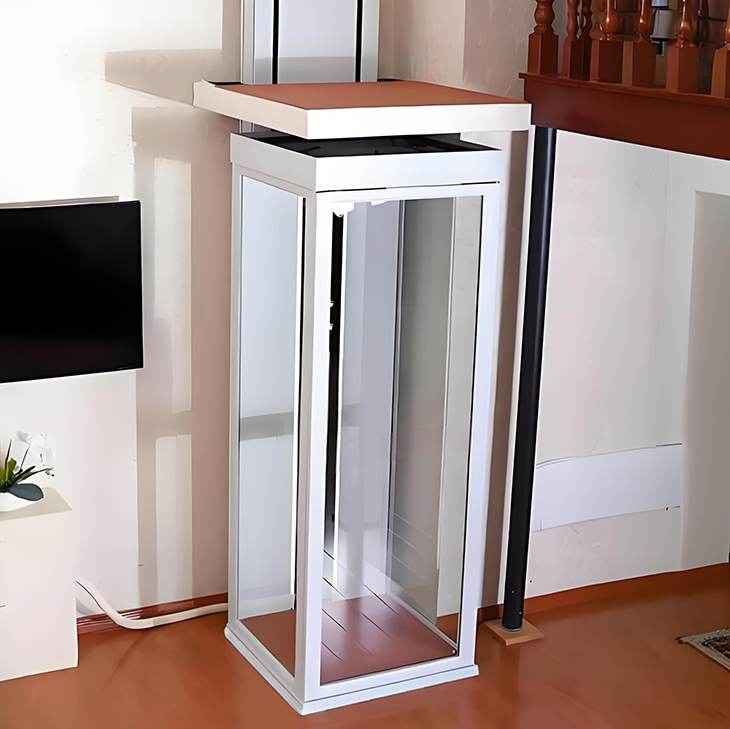
a white frame small lift for home use


Quick answer (short summary)

  • Typical price range for a shaftless residential elevator: roughly $5,000 to $15,000 installed for most single-floor residential shaftless models; premium or customized units can be higher. This depends on platform size, load capacity, travelling height, final finishes, and site work. 


What is a shaftless home elevator — and why is it cheaper?

A shaftless elevator (also called a home lift) is a compact vertical lift designed for homes that does not require a full hoist or framed hoistway. Many shaftless designs mount to a mast or guide system or use a small structural enclosure that passes through a single floor opening. Because they avoid full shaft construction and large mechanical rooms, they generally have lower labor and construction costs than traditional elevators — especially when serving only two floors. Manufacturer pricing and buyer guides reflect this lower installed cost compared with full-shaft passenger elevators. 


Typical cost breakdown

When you budget for a shaftless home elevator, consider these components:

  1. Unit price (equipment): $10,000–$30,000 for many shaftless/home lift models (standard finishes, single-floor travel). Some well-known manufacturers list their compact models in the low-to-mid-$20k range. Source: stiltzlifts.com

  2. Installation & labor: $1,000–$2,000 depending on site complexity (cutting floor openings, reinforcing landing, routing electrical, finish carpentry).

  3. Permits, inspections & fees: Permits and inspections vary by jurisdiction; plan to pay permit fees and any plan-review charges required by your building department. (See local building/elevator permit pages for specifics.) U.S. Access Board — Elevators & Platform Lifts.

  4. Optional extras: Custom cab finishes, automatic doors, remote diagnostics, or compliance upgrades (e.g., larger cabs for wheelchair access) add cost — sometimes significantly.

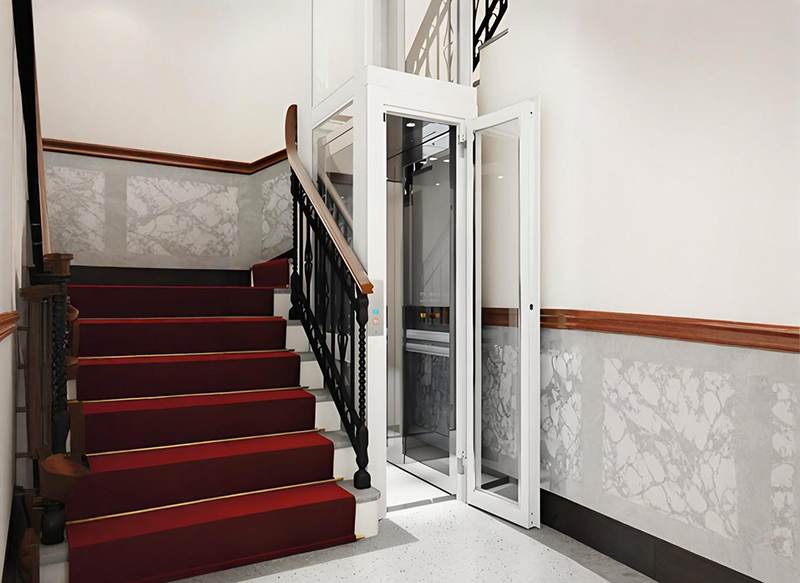
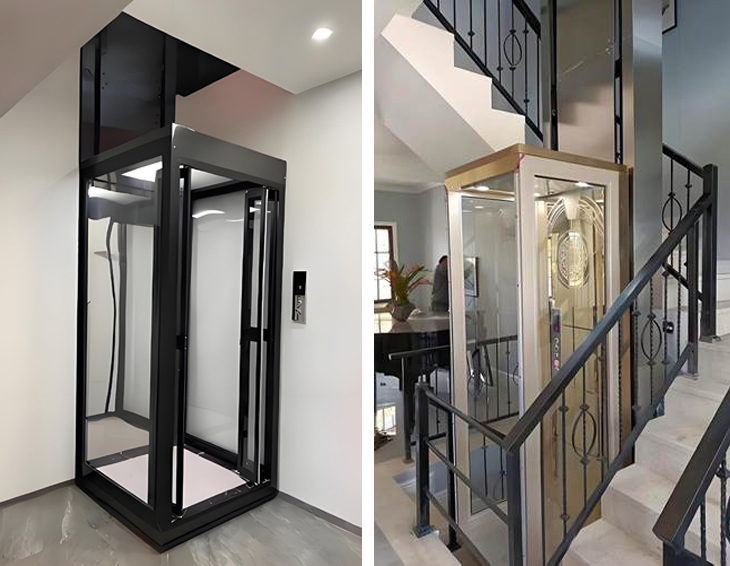
a pit less home elevator installed near the staircase.

Putting it together: many homeowners report total installed costs for shaftless home lifts in the neighborhood of $15k–$35k, while higher-end or accessibility-sized options can approach $40k–$60k. Industry price surveys and consumer guides echo this range. 

Watch The Shaftless Elevator Feedback Video From  Customer

Examples from manufacturers and industry

  • Stiltz — a leading shaftless/home lift manufacturer, positions compact residential lifts often in the low-to-mid $20k range for typical two-floor installs (actual cost varies by model and site). Manufacturer pages and dealer quotes are useful to get an accurate, location-specific number. 

  • Skystair — a developing manufacturers publish ranges for home lifts; some two-floor home lift solutions are commonly quoted in $5000 to $10000 range in the United States. Always ask local dealers for an installed quote. Skystair Global.

(Manufacturer pages are excellent for exact dimensions, capacities, and required clearances — essential inputs for a reliable install quote.)


Codes, accessibility, and safety — don’t skip this step

Shaftless lifts for private residences are subject to safety rules and local building/elevator codes. If you need a lift to meet accessibility requirements (wheelchair access), the unit and install will often need to meet stricter standards (larger cab, higher rated capacity), which increases cost. The U.S. Access Board and federal guidance outline how private residence lifts fit into accessibility and safety frameworks — a key reference when designing or specifying a lift. access-board.gov

Additionally, many jurisdictions require elevator permits, plan review, and inspections — all of which add cost and time. Check your city or state elevator/permit pages before committing. dbs.lacity.gov


How to get an accurate quote (best practice)

  1. Decide the use: Is it for ambulatory users only, or must it be wheelchair accessible? Wheelchair-capable lifts are pricier.

  2. Gather site info: Travel distance, floor-opening size, structural access, and available power all matter.

  3. Request multiple dealer quotes: Ask at least 2–3 certified dealers (manufacturer dealers if possible) and insist the quote itemizes unit price, installation, permits, and extras.

  4. Ask about warranties and maintenance: Lifetime cost includes service contracts and periodic inspections.

  5. Ask for references and sample installs: photos or local installs let you see finished work and typical hidden costs.

a golden frame elevator for home use


Bottom line

Shaftless residential elevators are one of the most cost-effective ways to add vertical access in a two-story home. Expect roughly $5,000–$40,000 installed for the typical shaftless model, but get local quotes — final price depends on capacity, finishes, required structural work, permits, and whether the unit must meet accessibility standards. For reliable planning, consult manufacturer spec sheets and your local building department, then get at least two written installed quotes.

Interested in a shaftless elevator price quote? Contact us for a free consultation!

(We will reply you within 24 hours)

Share this

© 2017 skyliftcc. All rights reserved.

Click Me