15 Jun 2026

Through-the-Floor Home Elevator–Most Affordable Option for U.S. Houses

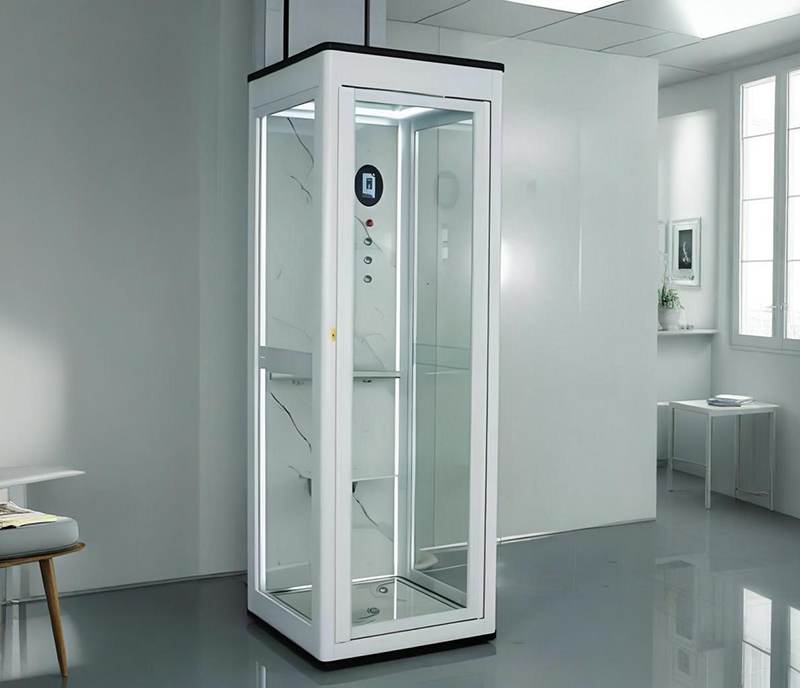
Unlike standard lifts enclosed within a shaft, through-the-floor elevator travelling up and down through a small opening cut into the ceiling or floor.

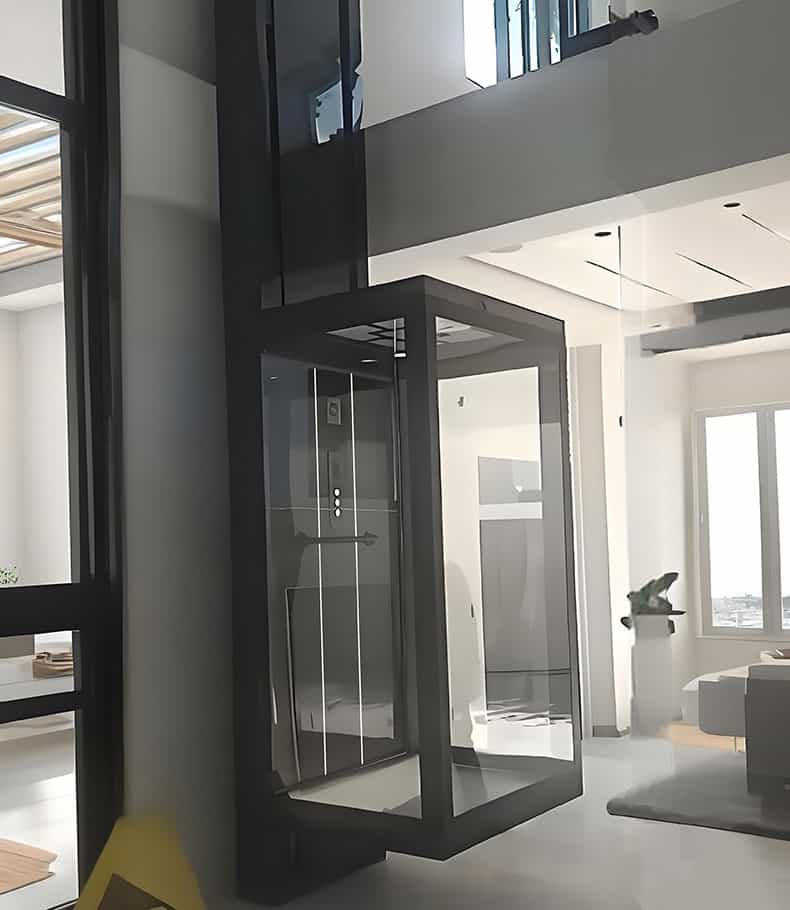
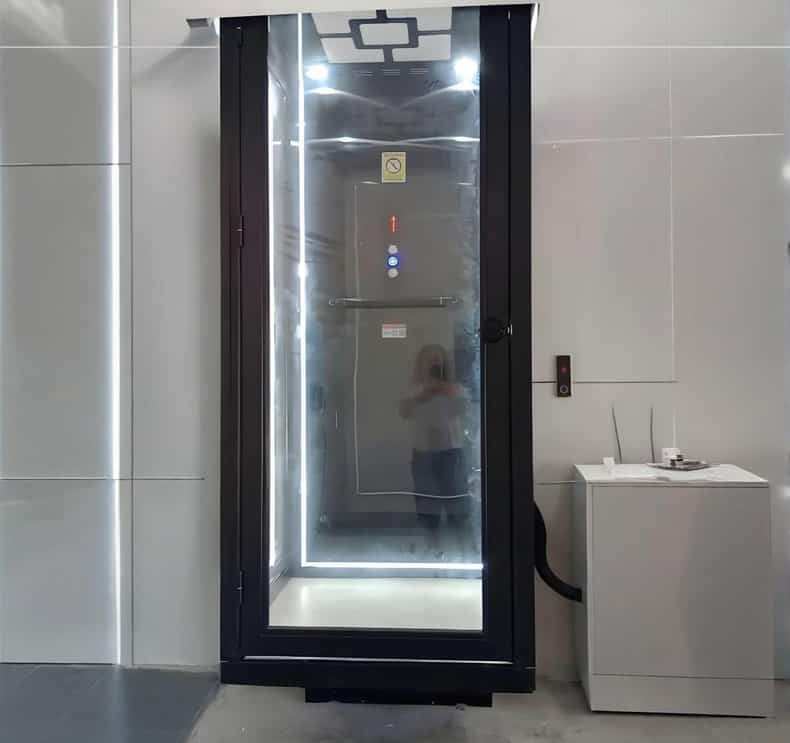
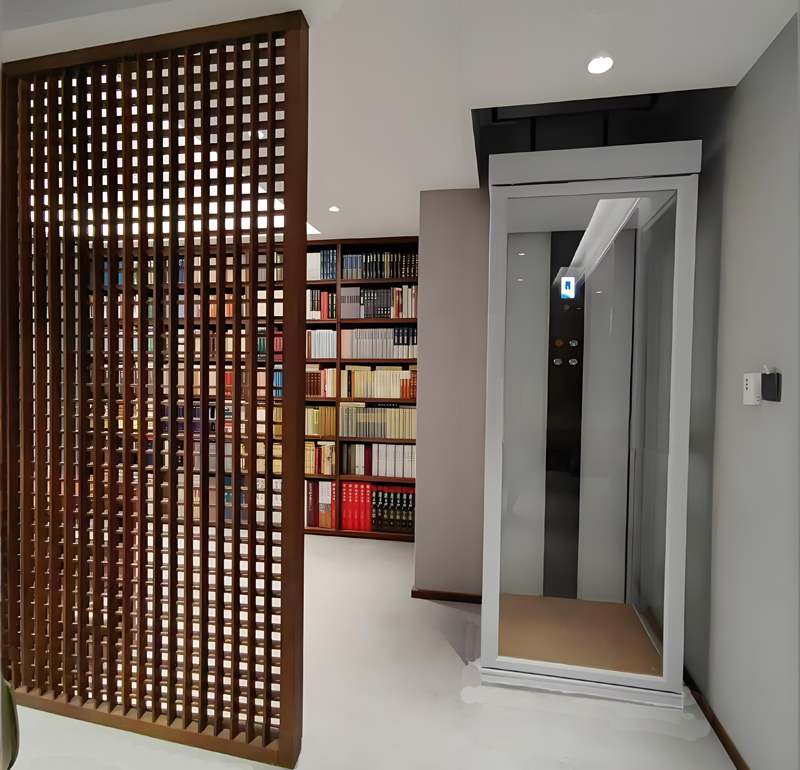
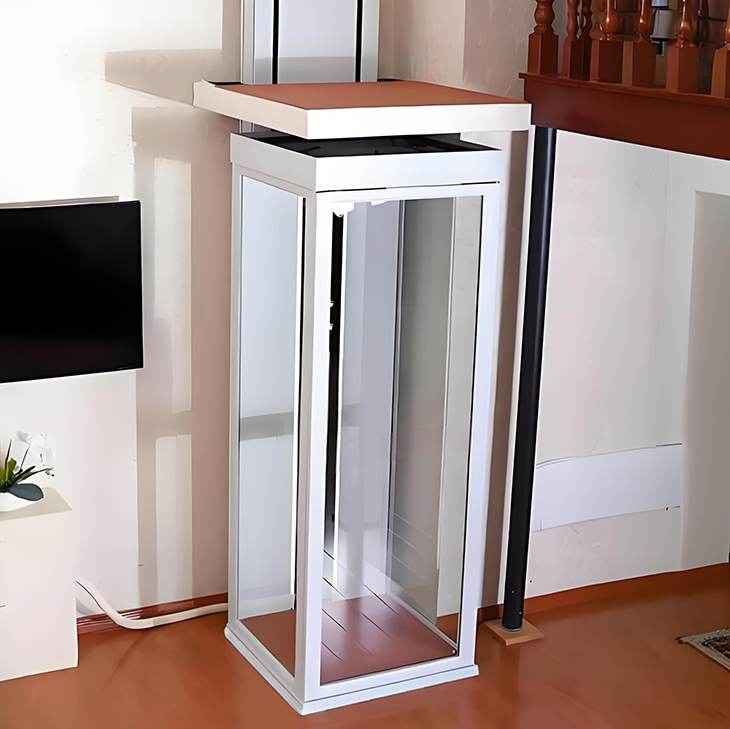
A shaftless home lift installed in a 2 floor modern house.

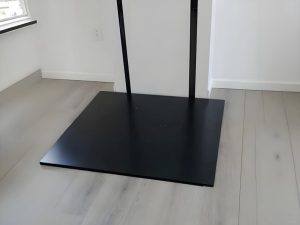
● Ground-floor appearance: When the elevator on upper floor, only the vertical guide rails are visible on the wall. The floor space below is clear.

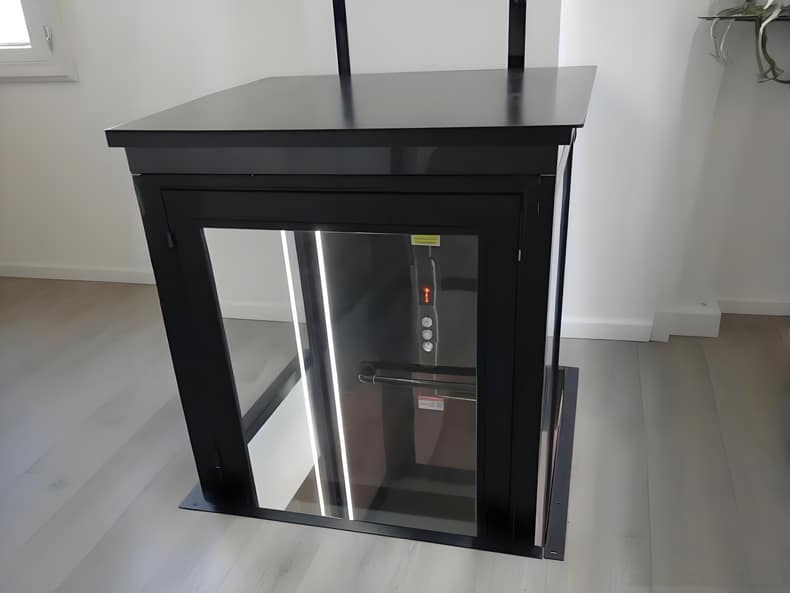
● Upper-floor appearance: When the elevator at lower level, a safety cover plate naturally covers the opening on the second floor; it is load-bearing and safety to walk on.

Safety tip: The system equipped built-in safety switches at both the top and bottom. If a pet, child or other obstacle is detected below whilst the cab is descending, the sensors will detect the obstruction and immediately stop the elevator.

Why is it the most cost-effective option for renovations?

1. Shaftless Design.

Traditional elevators require the construction of a enclosed shaft (hoistway) and excavation of a pit in the foundation, with contractor costs alone easily adding up to $10,000 to $20,000. Shaftless elevators require neither a pit nor a shaft. Local contractors simply need to cut a hole in the ceiling joists and reinforce the edges. 

2. Minimal Electrical Modifications

Most through-the-floor models can be powered by standard domestic power sockets. They simply plug into a standard 220V/230V socket, with a maximum operating current of 14 Amps, eliminating the need for expensive commercial-grade distribution boards and circuit breakers.

3. Rapid Installation Reduces Labour Costs

Thanks to the easy installed modular design,normal skilled worker can complete the installation within 2 to 3 days. If you are a handy man, you can even finish installation by yourself. Traditional models often require several weeks by a professional elevator contractor..

Check How Through-the-Floor Home Elevator works:

2026 Cost Comparison: Through-the-Floor vs. Traditional Lifts

To give you a realistic picture of the current US market, here is a comparison of the average total installation costs for different elevator solutions:

Elevator type

Average cost ( installed )

Min Space Requirements

         Best For

Through-the-Floor Elevator

       $10,000 – $15,000

        31 x 39 inches

Tight spaces, 2-3 floor travel.

Pneumatic Vacuum Elevator

       $35,000–$50,000+

        35×35 inches.

Retrofit exist homes quickly

Traction Elevator

       $25,000 – $45,000

        47×55 inches.

  Luxury modern house

Note: Popular brands of through-the-floor elevator on the US market include Stiltz (Duo/Trio series) , Skystair Elevator and Savaria Telecab.

The cost of the basic unit is approximately $10,000 to $30,000; this price does not include local labour costs or licensing fees.

Advantages for Through-the-Floor Home Elevator.

Cost-effective: Total costs range from approximately $20,000 to $30,000,  some budget friendly elevator even available for $10,000 to $15,000.

Small footprint: Requires a minimum space of just 31.5 x 39 inches.

Extremely low noise: Operating noise levels are approximately 50–60 dB, same as our normal talking.

Quick installation: Installation can be completed in 2–3 days.

Increase property value: Boosts the resale value of your home and attracts a large number of family seeking barrier-free accommodations.

Relocatable: If you sell your house, a shaftless elevator can actually be dismantled and relocated to your next property.

Final conclusion: Is it right for your home?

If your home is a 2 or 3 storey structure with limited space, and you wish to avoid complex and costly structural alterations, 

then a shaftless elevator is undoubtedly the most cost-effective and powerful option available in the US today.

  Interested install a shaftless home elevator below $10k Contact us for a details quote!  

(We will reply you within 24 hours)

Share this
02 Jun 2026

Home Elevator For Seniors– Costs, Types, and Expert Safety Guides

Over 71% of older adults prefer to age in place rather than move into an assisted living facility (source: AARP / American Association of Retired Persons). You can install a home elevator which is  specifically designed for older adults, costing between $10,000 and over $50,000, depending on the drive system and renovation work required. Compared to the average monthly fees for assisted living facilities (over $1,700–$3,700), a home elevator can pay for itself within 1 to 2 years, whilst increasing the home’s value by 10% to 25%. Let’s check e the most suitable elevators for seniors mobility, budget, and standard safety features.

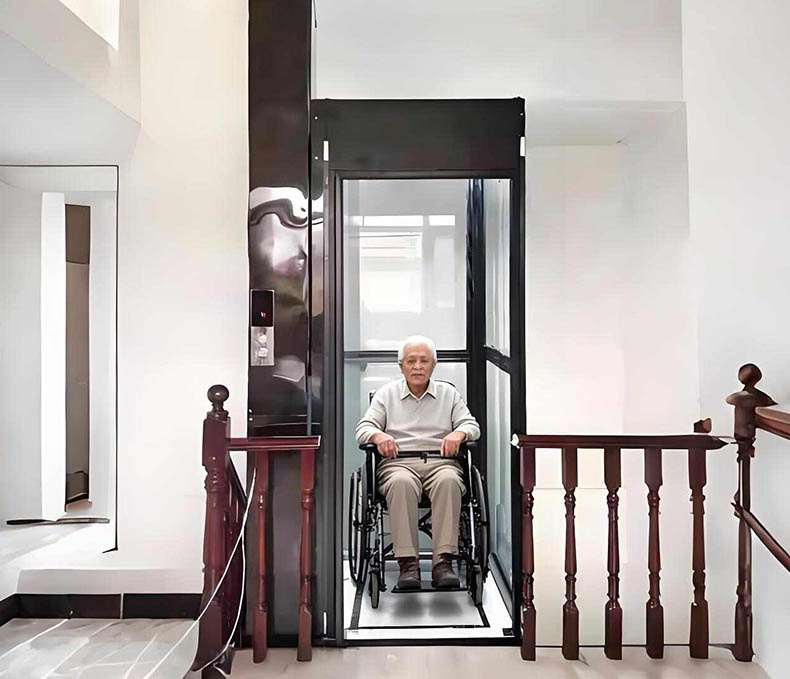
A black shaftless home elevator installed in a modern house

1. Why choose a home elevator to support seniors’ mobility?  

Short answer: A home elevator eliminates the biggest safety hazard in an elderly person’s daily life—climbing stairs—support them to lives safety. 

key point as following:

● Safety first: Eliminate falling risks associated with stairs, the leading cause of injury among seniors aged over 65.

● Property value increased: Data from the National Association of Realtors (NAR) shows that installing a home elevator can increase a home’s resale value by 10% to 25%.

● Future-use: Easily fit walking aid, wheelchairs and other heavy items.

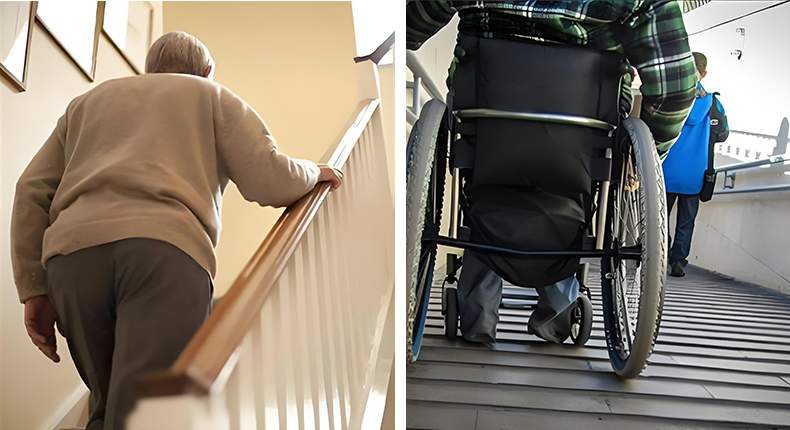
a senior and a wheelchair moves along with a staircase

2.What is the price of a home elevator for seniors?

Quick answer: The average cost for a senior home elevator ranges from $10,000 to over $50,000.

To help you plan your budget, here is a breakdown of costs and features verified by the National Association of Home Builders (NAHB) and modern manufacturing industry standards:

Elevator type

Average cost ( installed )

Min Space Requirements

         Best For

Shaftless/Pitless Elevator

       $10,000 – $15,000

        31 x 40 inches

Tight spaces, 2-3 floor travel.

Pneumatic Vacuum Elevator

       $35,000–$50,000+

        35×35 inches.

Retrofit exist homes quickly

Traction Elevator

       $25,000 – $45,000

        47×55 inches.

  Luxury modern house

Expert advice on hidden costs: In addition to the cost of the elevator itself, be sure to confirm with supplier if need any structure modifications in site (US$1,000–10,000) and annual maintenance costs.

   3. Which elevator is best suited for older people?   

   Straight answer: For older people using wheelchairs or walking aids, most budget friendly model is shaftless and pitless through-the-floor elevator.   

A shaftless home elevator installed in a 2 floor US townhouse.

Below is a detailed analysis of the most popular home elevator configurations:

Shaftless, pitless through-the-floor elevator (ideal for small homes)

These elevators require no formal lift shaft or pit, operating through a simple ceiling opening between two floors.

● Advantages: Minimal impact on building structure, quick installation (takes just 2-3 days), and most affordable for money. Running smoothly with low noise about 60Db.

● Disadvantages: No enclosed glass shaft and no automatic sliding doors, seen not as luxurious.

Watch The Shaftless Home Elevator Feedback Video From our Customer

   Five Essential Safety Features for a seniors elevator:   

Mechanical Braking Devices.

Regulatory requirement: Mechanical safety brakes must be fitted.

How it works: If driving cable breaks, the mechanical braking device physically engages to prevent the elevator from falling.

Interlocking between Car Doors and Landing Doors.

Landing doors will not open until the car has arrived.

Regulatory Requirement: Car door and landing doors has interlocks with the elevator system.

How it works: The elevator can’t moves unless the car doors and landing doors are fully closed and locked. Also, the landing doors on a particular floor cannot be opened unless the car is actually stopped at that floor.

Manual Lowering Device.

Code Requirement: In the event of a suddenly power failure, if the car is suspended in mid-floor, an additional manual lowing device must be equipped to lower the car to the lowest floor.

How it works: Open the manual lowering valve (applicable to hydraulic systems) to lower the car to the lowest floor.

Emergency Backup Power for emergency descend.

Regulatory Requirements:If there is a power cut while using the elevator, it can be driven to the lower level of the home and will then wait until the power comes back on to resume normal service.

How it works: The emergency battery automatically activates when the main power supply fails, using the control system to lower the lift to the ground floor.

Elevator Fault Detection and Voice Alerts.

 Regulatory Requirements: In the event of a fault in the elevator system or safety device activated, the system can automatically detect the fault and issue a voice alert.

How it works: The elevator system can detect signals automatically and identify the corresponding faults.

Direct answer: When purchasing a residential elevator for the elderly,you must ensure that the system has sufficient safety redundancies so that elderly people can easily assess and deal with unexpected situations and malfunctions when using the elevator on their own, and never trapped inside.

   Frequently Asked Questions (FAQ)   

1. Does Medicare cover the cost of a home lift?

Answer: No, it cant.

Basic Medicare (Parts A and B) doesnt cover the cost of purchasing or installing a home elevator. Even if your doctor can write a prescription stating that a home elevator or stairlift is essential for your safety, Medicare will almost deny the claim.

Medicare classifies home elevators, vertical platform lifts, and stairlifts as home modifications rather than medical equipment. Because these device enhance its access mobility and resale value, Medicare views them as home improvements—not strictly“medically necessary”equipment.  That is the point.

2. How long does it take to install a home lift?

Answer: Shaftless home lift require very little construction work and can be installed within 2-3 days. Some brands are using modular installation designs, normal skilled handyman can finished the installation, no need ask a professional elevator man.

3. How long is the lifespan of a home lift?

Answer: A high-quality home lift can last between 20 and 30 years with good annual maintenance. Some mechanical wear parts, such as cables in hydraulic models, should be inspected and replaced every 3-5 years.


  Interested install a home elevator below $10k Contact us for a details quote!  

(We will reply you within 24 hours)

Share this
29 May 2026

Tiny home elevator for replace stairs in U.S. house

For young people, It’s ok to reach the second-floor loft or bedroom via a spiral staircase.However, if your parents move in to live with you, the situation becomes more complicated: you will always worry about their safety when going up and down the stairs.

   Is there a tiny home elevator that could replace the spiral staircase? The answer is yes.  

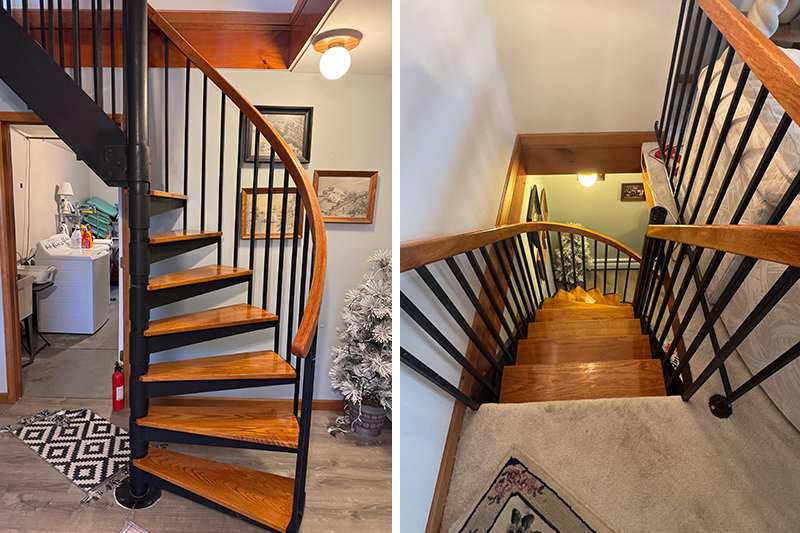
A wooden spiral staircase installed in a 2 floor US townhouse

Mini home elevator have becoming the most practical and space-saving options to traditional staircases.

Many builders believe an elevator take up too much floor space. However, when we analyse the actual floor space they occupy, the data reveals a very different reality.

Traditional staircases require horizontal ‘steps’ to ensure a safe climbing angle. Mini elevator, such as pneumatic vacuum lifts (PVEs) or shaftless hydraulic elevator, moving inside vertical tracks. By install a elevator, you can reclaim up to 75% of the floor space previously wasted by stairs.

a simple white home elevator installed in a modern house

   2 Types Mini Home Elevators Best Suitable for replace stairs:   

1. Pneumatic Vacuum Elevator (PVE)

These lifts resemble futuristic glass tubes and operate using air pressure.

● Advantages: No pit or shaft required; can be installed directly onto existing floors.

● Dimensions: The smallest models have an external diameter of just 35 inches.

Cost include installation about  $35,000$50,000+

2. Shaftless Through-the-Floor Home Elevator

These elevators travelling along vertical guide rails, with access via a simple opening cut into the ceiling or loft floor.

● Advantages:   Mostly affordable and budget-friendly choice. No pit, no Machine room required.   When the cabin at lower level, the opening in the loft floor will be covered with a safety lid to ensure safety;

● Dimensions: The smallest footprint about 30 inches × 39 inches.

Cost include installation about  $10,000 $15,000

Watch The Shaftless Home Elevator Feedback Video From our Customer


   Key advantages of replacing stairs with a mini elevator:  

● Space-saving.

The mini elevator occupy less floor space than spiral staircases (typically requiring only 30×39 inches), making them particularly suitable for small homes or two-storey lofts with limited space.

● Enhanced convenience and comfort.

Easier to transport heavy items, luggage or assist those with limited mobility (the elderly, pregnant women, injured persons, etc.), reducing physical exertion and travel time.

● More Safety.

Spiral staircases have narrow and higher steps, will be easy to miss a step or fall; the elevator cabin is enclosed, equipped with safety features such as anti-fall, anti-crush and emergency lowering system, making them more suitable for households with children or elderly residents.

● Enhanced Future Adaptability.

Adding a elevator will avoid further home modifications or relocation due to mobility issues later on.

● Increased House Value.

Installing a mini elevator increased your home value, making it more attractive to buyers seeking upgraded properties in an ageing society.

● Quiet Operation.

Modern home elevators using silent motors and glass/mirrored cabins, easily meet your house interior styles. They offer a more high-tech feeling than spiral staircases.

● Easy Installation.

Unlike spiral staircases, which require large openings ( need deeper holes on floor ) and complex structures, a home elevator only needs a small opening in the existing floor slab and requires no pit or separate machine room. Some elevators also support installation by normal skilled people, no need ask a professional elevator engineer.  Saves lots of installation charges.

Is a Mini Home Elevator Cost Meet Your Budget?

Its more safety, but will cost more..

Spiral staircase: $1,500–$4,500 (depending on the height and the material)

● Compact home elevator: $10,000–$28,000 (including transport and installation)

Expert advice:If you are investing in a long time living residence or making a house update,install a budget friendly mini elevator is becoming essential and necessary.

The home elevators we make is in pitless, shaftless design, normal skilled handyman can finished installation within 2-3 days, significantly reducing structural modify cost and installation costs. Minimum installation space 30 x 39 inches, it can be a ideal as a most cost-effective home elevator solution.

  Interested install a tiny home elevator below $10k Contact us for a details quote!  

(We will reply you within 24 hours)

Share this
28 May 2026

Does U.S. Medicare Pay for a Home Elevator? Coverage, Costs, and Alternatives

If you or family senior member is facing mobility challenges, living in a multi-story home becomes inconvenient. Install a home elevator seems a perfect solution for aging in place. However, this will cost about $10,000 to $50,000.

So, Does U.S. Medicare pay for a home elevator cost?

Lets check how Medicare defines home elevator and what it actually covers:

  Quick conclusion: Does Medicare cover home elevators cost? — No, it don’t.  

Basic Medicare (Parts A and B) doesnt cover the cost of purchasing or installing a home elevator.

Even if your doctor can write a prescription stating that a home elevator or stairlift is essential for your safety, Medicare will almost deny the claim.

  Why doesn’t Medicare cover the home elevator cost?  

To understand why Medicare denies coverage, you must understand its classification standard for medical equipment. Under Medicare Part B regulations, coverage is strictly limited to Durable Medical Equipment (DME).

To be classified as DME, a device must meet following points:

● It must have a clear medical purpose.

● It must be useful only to individuals who are ill, injured, or disabled.

● It must be durable enough for support long time use (at least 3 years).

Clearly, home elevators do not meet the first point.

Medicare classifies home elevators, vertical platform lifts, and stairlifts as home modifications rather than medical equipment. Because these device enhance its access mobility and resale value, Medicare views them as home improvements—not strictly“medically necessary”equipment.  That is the point.

  What should we do?  

While home elevators are not covered, get a  budget friendly elevator ( lower elevator cost + lower installation cost ) is becoming necessary.   

Following some popular elevators with budget for your reference:

Elevator type

Average cost ( installed )

Min Space Requirements

         Best For

Shaftless/Pitless Elevator

       $10,000 – $15,000

        31 x 40 inches

Tight spaces, 2-3 floor travel.

Pneumatic Vacuum Elevator

       $35,000–$50,000+

        35×35 inches.

Retrofit exist homes quickly

Traction Elevator

       $25,000 – $45,000

        47×55 inches.

  Luxury modern house

The home elevators we make is in pitless, shaftless design, normal skilled handyman can finished installation within 2-3 days, significantly reducing structural modify cost and installation costs. Minimum installation space 31 x 40 inches, it can be a ideal as a most cost-effective home elevator solution.

A shaftless home elevator installed in a 2 floor US townhouse.

Watch The Affordable Home Elevator Feedback Video From our Customer

  Interested install a home elevator below $10k Contact us for a details quote!  

(We will reply you within 24 hours)

Share this
25 May 2026

Affordable Home Lift for 2 Floor and 3 Floor House in United States.

Installing a home lift in a multi-floors house is no longer a luxury investment. The cost of modern home lifts has dropped significantly.

Whether your home has 2 or 3 floors, this guide will introduce you to get the most cost-effective home lift options on the U.S. market, including a actual cost, installation space requirements, and the elevator types that best fit your budget.

A shaftless home lift installed in a 2 floor modern house.

Quick Overview: How Much Does an Affordable Home Lift Cost in the U.S.?

In 2026, the average cost to install an economy home lift in the U.S. typically ranges from $10,000 to $55,000, which includes the equipment itself, extra replacement kits and installation fees.The total price is determined by the number of floors, the drive type and whether your home requires extra structural modifications.

Key Points: Elevators that do not require a enclosed shaft or deep pit typically have the lowest cost, as they not need big modification on house structure.

Here are the top budget-friendly home lift options currently available in the U.S. market: 

1.  Shaftless and Through-theFloor Elevators (mostly recommended for 2 and 3 Floor Homes) 

Shaftless elevators are the best space and cost saving option for two and three-story homes. The car does not travel within an enclosed drywall shaft but moves up and down along self-supporting rails through an opening in the ceiling.

Estimated Cost: $10,000–$15,000 (including installation)  

● Why it’s the mostly affordable: No pit or elevator shaft is required, no need separate machine room, and carpentry work is minimal. Standard installation typically takes only 1–2 days to complete.

● Space requirements: Minimum 31.5 inches × 39 inches.

Watch The Shaftless Home Lift Feedback Video From our Customer


2. Pneumatic Vacuum Elevator (PVE) (The best modern choice for 2–3 floors)

Pneumatic elevators use air pressure within a panoramic, transparent acrylic tube to lift the car.

● Estimated Cost: $35,000–$50,000+ (including installation)

● Why It’s Cost-Effective: PVE elevators are fully self-supporting, meaning they are installed directly on existing floor slabs. They can be easily expanded to 3 or 4 stops without major construction (each additional stop costs over $5,000) .

● Space requirements: Minimum of approximately 35×35 inches.

3. Machine-Room-Less (MRL) Traction Elevator (Best for Three-Story Homes)

Modern MRL traction elevators mount the motor directly at the top of the shaft and use a standard counterweight system.

● Estimated Cost: $25,000 – $45,000 (including installation)

● Floor Space: Minimum of approximately 47×55 inches.

 a white home elevator lift installed inside a modern room with wooden floor.

What Factors Determine the Cost of a Home Lift in the U.S.?

When planning a budget for a home lift, total cost is typically divided into three parts:

[Total Elevator Cost] = [ Equipment cost ] + [ Site Preparation and Construction cost ] + [ Installation Cost ]

● Equipment Cost ($10,000–$35,000): Include the elevator partscabin, driving system and control system.

● Site Preparation and Labor cost ($500–$1,500): Opening hole on concrete floor slabs or relocating structural beams in existing homes.

● Installation Fee ($3,000–$8,000): Hiring elevator installers to complete the final installation.

Modern home elevators are now manufactured in modular methods, allowing handy homeowners complete the installation by themselves and save huge installation costs.

Money-Saving Tips for Buying a Home Elevator.

1.  Choose a pitless/shaftless model:  Avoiding excavate a concrete pit and building shaft can save $5,000 to $10,000 in initial masonry costs.

2. Use closet space (if available): use the standard closed space as the elevator shafts can save huge modification costs on the house structure.

Conclusion: Choosing the Right Lift for Your Home

For two or three floor homes, compact shaftless elevators or pitless elevators are the most economical choices.

  Interested in an affordable home lift below $10k ? Contact us for a details quote.   

(We will reply you within 24 hours)

Share this
21 May 2026

How to Makes a Home Elevator More Affordable

To get a most affordable home elevator, you need to change your mind: the cost isn’t just the elevator itself, but the total investment required to install it in your home.

Many homeowners make the mistake of buying a “cheap” elevator, only to see the project cost double due to exorbitant installation fees. 

Affordable shaftless home lift installed in a 3 floor US townhouse

Here’s what really makes a cost effective home elevator for your home:

1. Minimal structural modifications (“Pitless advantage”)

This is the key factor for install an affordable elevator.

● Cost Driver: Traditional traction elevators require digging a pit 4 feet deep, breaking up the existing concrete floor, and pouring a new foundation—all of which entail significant costs.

● Cost-Effective Solution: Pitless (or non-pit) technology. 

Choose  a pitless model can save you thousands of dollars in labor, materials, and structural engineering costs.

2. Shaftless Design (No Construction Required)

Building elevator shaft in an existing home can cost more than the elevator itself,and it will also take up more space in the home.

Cost-effective solution: Shaftless elevators. 

These elevators run along self-supporting tracks and not need enclosed machine room or shaft, allowing them to be installed in house corners, stairwell voids, or closet spaces without extensive wall modifications.

3. Simplified Drive Systems

The elevator’s drive system determines its price and ongoing maintenance costs.

Hydraulic Drive Elevators: For normal residential house, this is typically the most cost-effective, safe and reliable option. Compared to traditional screw or traction systems, hydraulic elevators have less fault parts and not need pit or shaft, resulting in lower installation costs and less maintenance cost.

● Avoid Over-Customization: Choosing a standard-sized elevator with 1 to 2 stops and manual swing doors can significantly reduce manufacturing costs.

Affordable shaftless home lift installed in a 2 floor US townhouse

4. Choose Standard Factory Kits.

Customization is a luxury. Every time you request custom cabin finishes, or specific colors, the price goes up.

● Cost-Effective Solutions: Choose the manufacturer’s “base standard models.” Manufacturers offer models in standard sizes (e.g., 37 × 37 inches). Since these elevators all in standard parameter, they are much cheaper than custom models.

5. Quick Installation.

Labor and logistics are hidden costs.

Modular Assembly: Modern home elevators are adopting a ‘modular’ design—they consist of pre-assembled components that can be moved through standard doorways. This eliminates the need for cranes or the demolition of load-bearing walls, thereby reducing installation costs.

Our affordable elevator was designed and built in easy-installed module, normal skilled worker can finished installation within 2-3 daysIf you are a handyman, you can do it by yourself instead of hiring a installer. Cut down the total budget range to $5,000-$10,000.

Watch The Affordable Home Elevator Feedback Video From our Customer


What Should an Affordable Home Elevator Have? 


  1. A silent motor for indoor home use.
  2. Safety sensor on the cabin door, elevator can’t moves if the doot not closed.
  3. Safety pan under the platform, elevator stops working when the safety pay touched any berrier under it.
  4. Fault voice alert.
  5. Maximum height limit switch for additional safety redundancy.
  6. A safety gate/door on second floor for prevent dropping. Gate/door can’t opened if the platform not arrive. 
  7. A extra battery backup for emergency lowering if power failure.
  8. A descend valve for manual lowering.

Checklist for a Affordable Project:

Feature

Expensive Choice

Affordable Choice

Shaft

Custom concrete/drywall shaft

Shaftless or pre-fab metal tower

Foundation

4 feet deep pit

Pitless installation

Doors

Automatic sliding door

Manual swing door

Customization

Customized cabin size

Manufacturer’s standard size

Drive

High-speed luxury traction

Reliable hydraulic-drive

The “Hidden” Rules of Affordability.

An affordable elevator is one that neither depreciates the value of your home nor exceeds your budget due to hidden maintenance costs.

If you want to get the best price, request quotes from three different suppliers and ask explicitly: “What is the total cost, including all site preparation, electrical work, and installation fees?” 

Never accept a quote for the “equipment” alone.

Interested in an affordable home elevator? Contact us for a details quote. 

(We will reply you within 24 hours)

Share this
19 May 2026

Safety Features On An Affordable Home Elevator

When homeowners hear the phrase ‘affordable home elevator‘, they often picture simple construction hoists. This is a misconception.

Thanks to technological advances in modern residential lifts, even some structurally simple machine-room-less (MRL) elevators are equipped with redundant safety systems. However,’affordable’certainly does not mean ‘compromising on safety’. If a quote seems unusually low, be sure to ask whether sufficient safety features are included.

a simple white home elevator installed in a modern house

Below are the safety features on an affordable home elevator, even on a limited budget.

  •  ‘Essential’ Mechanical Braking Devices.

Regulatory requirement: Mechanical safety brakes must be fitted.

How it works: If driving cable breaks, the mechanical braking device physically engages to prevent the elevator from falling. 

  • Interlocking between Car Doors and Landing Doors.

Landing doors will not open until the car has arrived.

Regulatory Requirement: Car door and landing doors has interlocks with the elevator system.

How it works: The elevator cant moves unless the car doors and landing doors are fully closed and locked. Also, the landing doors on a particular floor cannot be opened unless the car is actually stopped at that floor.

  • Manual Lowering Device.

Code Requirement: In the event of a suddenly power failure, if the car is suspended in mid-floor, an additional manual lowing device must be equipped to lower the car to the lowest floor.

How it works: Open the manual lowering valve (applicable to hydraulic systems) to lower the car to the lowest floor. 

  • Emergency Backup Power for emergency descend.

Regulatory Requirements:If there is a power cut while using the elevator, it can be driven to the lower level of the home and will then wait until the power comes back on to resume normal service.

How it works: The emergency battery automatically activates when the main power supply fails, using the control system to lower the lift to the ground floor.

  • Elevator Fault Detection and Voice Alerts.

 Regulatory Requirements: In the event of a fault in the elevator system or safety device activated, the system can automatically detect the fault and issue a voice alert.

How it works: The elevator system can detect signals automatically and identify the corresponding faults.

Key Points: 

Even cost-effective home elevators are equipped with adequate safety features; it is essential to request a detailed list of safety specifications from the supplier.

Some affordable home elevator brand for your referebce: Savaria, Easy Climber, Skystair Home Elevator

Interested in a affordable home elevator? Contact us for a free consultation!

(We will reply you within 24 hours)

Share this
20 Apr 2026

Retrofitting a Home Elevator into an Old House: 2026 Complete Guide

Retrofitting a home elevator in an older house has become increasingly common. With the rise of compact home elevators, homeowners can now carry out retrofitting installations even in the most confined spaces.

2 home elevators in different color

When retrofitting a elevator into an existing older building, the following factors must be considered.

1. Find suitable location:

In older properties, the following are the three most common locations for retrofitting:

● Built-in cupboards: The most cost-effective method. By aligning cupboards across multiple floors, a natural lift shaft can be formed without the need for extensive structural demolition or alterations.

● Centre of the stairwell: If you have a spacious spiral staircase, the central void (i.e. the ‘centre of the stairwell’) is also an ideal location for installing an elevator.

● Room corners: This requires cutting through the floor in a room corner so that the elevator can pass through to reach higher floors.

2. Choosing the best suitable model

Shaftless, machine-room-less and pitless elevator.

This type of elevator minimises structural alteration costs, maximises space saving and reduces the overall budget.

3. Installation requirements for older properties:

The following issues must be resolved prior to installation:

  • Electrical requires: Most residential elevators require a dedicated 220V circuit. Electricity max 14 Amps, please make sure your house has a enough capacity power line and circult breaker.
  • Headroom Overhead  Space requires: Older attics or top-floor rooms may has a sloping ceilings. Please ensure the model you select meets the headroom requirements. Generally, a minimum of 7 feet is required.

Steps for Retrofitting:

●  Structural Assessment: Inspect and assess the load-bearing capacity of the floor slabs.

●  Permitting: Check if you need structural alteration permit and installation permit.

●  Model Selection: Choose a pitless and shaftless system.

On-site Survey: choose installation location and measure the available space.

● Selecting a Supplier: Choose a supplier with extensive manufacturing and installation experience; request installation manuals; hire installers or install it yourself. Some brands for your reference: Stiltze,  Bruno, Skystair Lift

On-site Installation: Assemble the lift car, secure the rails, connect the electrical wiring, and complete assembly and commissioning.

a pit less home elevator installed near the staircase.

Costs

The price range for the most economical elevator is $5,000–$10,000.

The price range for luxury lifts is $15,000–$25,000.

  Interested in retrofitting a small home elevator in your house below $10k Contact us for a details quote!  

(We will reply you within 24 hours)

Share this
14 Apr 2026

Small Residential Elevator Cost for 2 and 3 Floors: 2026 Budget Guide

Are you considering install a small residential elevator to make your home more convenient, but concerned about space requirements and costs? For standard two or three floors resident homes, our compact, economical elevators typically cost between $5,000 and $10,000, not include installation costs.

Small Residential Elevator for 2 and 3 Floors

Actual prices may vary depending on the dimensions and customized options. In this guide, we will provide a detailed guide of the actual costs for our compact residential elevator in 2026.

1. What are the main cost of two or three floors elevator?

  • A. Manufacturing and transport costs.

         The manufacturing and transport costs for our budget-friendly elevators can be within the range of $5,000 to $10,000.

  • B. Site preparation and installation costs.

         For a  2 floors elevator, installation costs may range from $2,000 to $4,000.

To reduce installation costs, we have designed a easy-installed elevator. Manufactured using an easy-to-assemble modular design, normal skilled worker can finished the installation within 2 to 3 days. If you are handyman, you may even install it by yourself. We will provide detailed assembly videos for your reference.

a simple white home elevator installed in a modern house

2. Why ‘compact and mini elevator‘ becomes a popular choice in 2026?

For the following reasons, an increasing number of homeowners are opting for compact or mini elevators:

  • Greater space efficiency: The smallest elevator models require only  31.5 x 39.4 inches of installation space (roughly the size of a standard closet).
  • Reduce structure modification cost and lower installation costs: Many compact models featured a ‘shaftless and through-the-floor slabs’design, and no need to build a dedicated elevator shaft. Can saves lots of labour cost.
  • Property value added: A two-three floor elevator can increase the home’s resale value by 5% to 8%, which is often enough to cover the initial cost of the elevator.

3. Future costs to consider.

In addition to the minimum initial investment of $5,000 to $10,000, we also need consider following cost:

● Maintenance:  $300 to $500 for safety inspections and lubrication every year.

● Electricity Costs: Modern small elevators are energy-efficient, and their power consumption during operation typically same like a standard household appliances (such as a toaster).

Watch The Home Elevator DIY Feedback Video From  Customer

Final thoughts: Is it worth it?

For two or three floor homes, a small residential elevator is no longer a luxury—it is a functional upgrade for ordinary working-class families. By choosing an economical, shaftless and wall-mounted model, you can significantly improve accessibility within your home whilst keeping the total cost to around $10,000.

  Interested in a budget friendly small residential elevator below $10,000 ? Contact us for a details quote!   
(We will reply you within 24 hours)

Share this
05 Mar 2026

Common Considerations When Installing a Home Elevator

Installing a home elevator is a project involving civil engineering, mechanical assembly, home renovation, and electrical wiring. To ensure safe and stable operation in the future, here are 5 factors issues you must address before installation:
a white home elevator lift installed inside a modern room with wooden floor.
1. Foundation and Space. 

  Many homeowners get caught out on “dimensions.”

  • Overhead Clearance: Sufficient safety clearance must be reserved at the top. Hydraulic elevators typically require a minimum overhead height of 7.5 feet.
  • Pit Excavation: If you require the elevator landing to be flush with the floor, a 3.5-inch-deep pit must be excavated at the bottom level.
  • Shaft / Back wall Verticality: The elevator shaft must be perfectly vertical. If the walls are crooked, it will cause shaking and noise during operation, severely compromising safety.
  • Minimum Space Requirements: Ensure a minimum clearance of 31.5 x 39 inches.

a white shaftless home lift with glass panel

2. Power & Electrical.
 Suitable outlets must be pre-planned and installed:

  • Voltage Selection: Determine whether to use 220V (single-phase) or 380V (three-phase). Standard home elevators can use 220V single-phase power with a maximum current of approximately 14 Amps.
  • Dedicated Circuit Breaker: A separate circuit breaker box must be reserved. It must not be shared with high-power household appliances (e.g., air conditioners).

3. Safety Features.
Don’t judge an elevator by its appearance alone—all essential safety functions must be included:

  • Full-height door: 1 or 2 full height doors on the platform.
  • Insided T-Rail as the moving structure. More stable and smoother.
  • Interior Grab Rail: Offers increased security for the occupants of the elevator.
  • Battery Back-Up System: If there is a power cut while using the elevator, it can be driven to the lower level of the home and will then wait until the power comes back on to resume normal service.
  • Door sensor: Platform can’t move if the door not closed.

extra safety device for the home elevator

Optional extra safety device:

  • Safety lid to cover the hole on second floor. ( for 2 floor elevator )
  • Manual Safety landing door on 2nd floor and 3rd floor. ( for 3 floor elevator )
  • Automatic safety landing door on 2nd floor and 3rd floor. ( for 3 floor elevator )
  • Elevator automatically returns to second floor when not in use.
  • Light curtain in stead of the cabin door.

4. Drive System Selection.
Choose based on your living environment:

  1. Seeking quiet operation and smooth rides: use traction driving elevator. The most mature technology, offering fast speeds. Higher price point.
  2. Extremely limited space, unwilling to dig a pit: Opt for hydraulic systems. Though slightly slower, they provide exceptional safety and eliminate noise concerns. A cheaper elevator options for nomal house owner. 

5. Maintenance and Warranty.
Home elevators are not “non-maintenance”devices; they require ongoing maintenance:

Category

Maintenance Task

Mechanical

Lubricate guide rails and check for alignment issues.

Drive System

Check hydraulic fluid levels (for hydraulic) or inspect drive belts/cables for fraying (for traction).

Safety Gears

Inspect the governor and safety gear mechanism that stops the car in a free-fall.

Electrical

Tighten all terminal connections in the controller and check for “hot spots.”

Backup Battery

Test the emergency battery to ensure it can still move the car during a power outage.

Interested install a home elevator for your home? Contact us for a details quote!
(We will reply you within 24 hours)

Share this

© 2017 skyliftcc. All rights reserved.

Click Me