
Common Considerations When Installing a Home Elevator
Installing a home elevator is a project involving civil engineering, mechanical assembly, home renovation, and electrical wiring. To ensure safe and stable operation in the future, here are 5 factors issues you must address before installation:
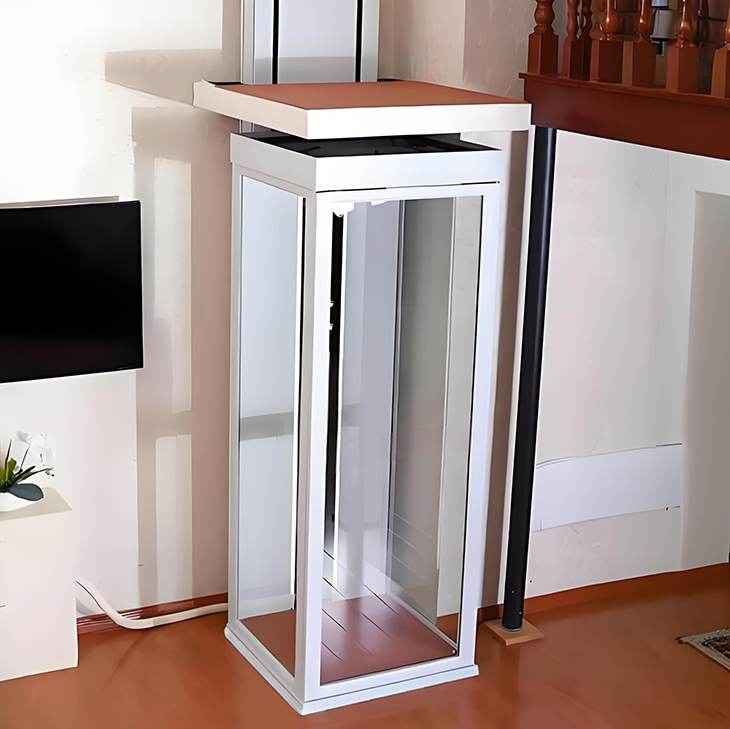
1. Foundation and Space.
Many homeowners get caught out on “dimensions.”
- Overhead Clearance: Sufficient safety clearance must be reserved at the top. Hydraulic elevators typically require a minimum overhead height of 7.5 feet.
- Pit Excavation: If you require the elevator landing to be flush with the floor, a 4.7-inch-deep pit must be excavated at the bottom level.
- Shaft / Back wall Verticality: The elevator shaft must be perfectly vertical. If the walls are crooked, it will cause shaking and noise during operation, severely compromising safety.
- Minimum Space Requirements: Ensure a minimum clearance of 31.5 x 39.4 inches.
2. Power & Electrical.
Suitable outlets must be pre-planned and installed:
- Voltage Selection: Determine whether to use 220V (single-phase) or 380V (three-phase). Standard home elevators can use 220V single-phase power with a maximum current of approximately 14 Amps.
- Dedicated Circuit Breaker: A separate circuit breaker box must be reserved. It must not be shared with high-power household appliances (e.g., air conditioners).
3. Safety Features.
Don’t judge an elevator by its appearance alone—all essential safety functions must be included:
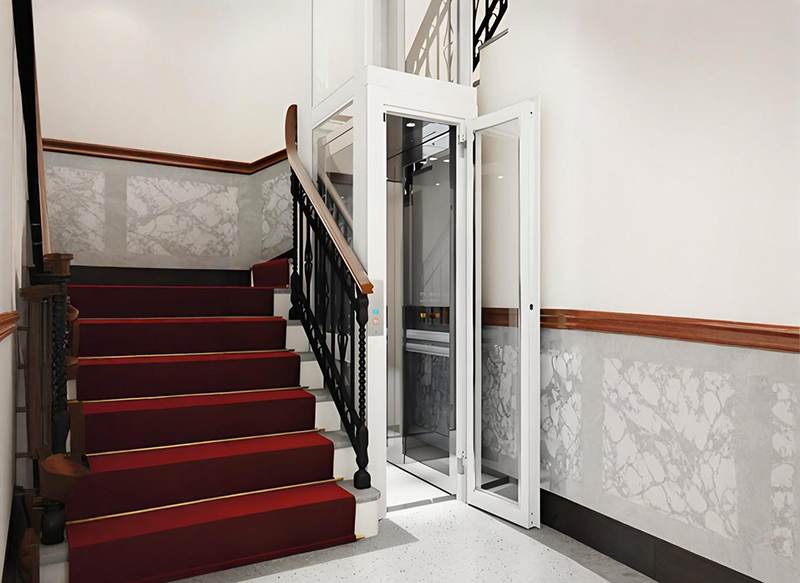
- Full-height door: 1 or 2 full height doors on the platform.
- Insided T-Rail as the moving structure. More stable and smoother.
- Interior Grab Rail: Offers increased security for the occupants of the elevator.
- Battery Back-Up System: If there is a power cut while using the elevator, it can be driven to the lower level of the home and will then wait until the power comes back on to resume normal service.
- Door sensor: Platform can’t move if the door not closed.
Optional extra safety device:
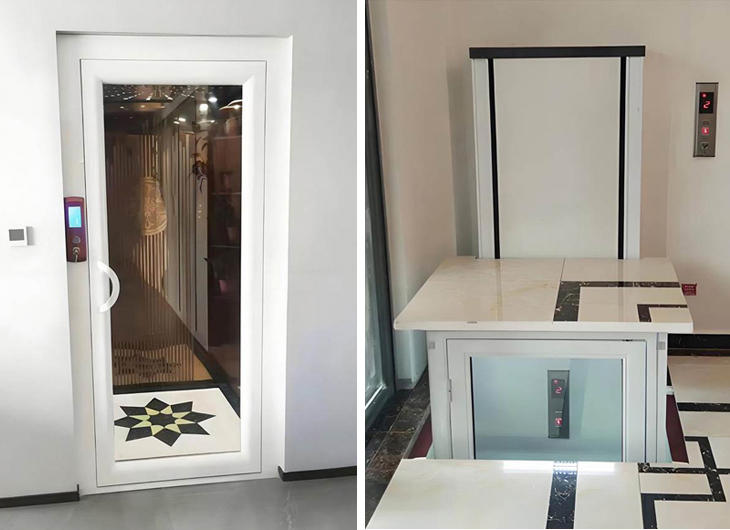
- Safety lid to cover the hole on second floor. ( for 2 floor elevator )
- Manual Safety landing door on 2nd floor and 3rd floor. ( for 3 floor elevator )
- Automatic safety landing door on 2nd floor and 3rd floor. ( for 3 floor elevator )
- Elevator automatically returns to second floor when not in use.
- Light curtain in stead of the cabin door.
4. Drive System Selection.
Choose based on your living environment:
- Seeking quiet operation and smooth rides: use traction driving elevator. The most mature technology, offering fast speeds. Higher price point.
- Extremely limited space, unwilling to dig a pit: Opt for hydraulic systems. Though slightly slower, they provide exceptional safety and eliminate noise concerns. A cheaper elevator options for nomal house owner.
5. Maintenance and Warranty.
Home elevators are not “non-maintenance”devices; they require ongoing maintenance:
|
Category |
Maintenance Task |
|
Mechanical |
Lubricate guide rails and check for alignment issues. |
|
Drive System |
Check hydraulic fluid levels (for hydraulic) or inspect drive belts/cables for fraying (for traction). |
|
Safety Gears |
Inspect the governor and safety gear mechanism that stops the car in a free-fall. |
|
Electrical |
Tighten all terminal connections in the controller and check for “hot spots.” |
|
Backup Battery |
Test the emergency battery to ensure it can still move the car during a power outage. |
Interested install a home elevator for your home? Contact us for a free consultation!