
How to Makes a Home Elevator More Affordable
To get a most affordable home elevator, you need to change your mind: the cost isn’t just the elevator itself, but the total investment required to install it in your home.
Many homeowners make the mistake of buying a “cheap” elevator, only to see the project cost double due to exorbitant installation fees.
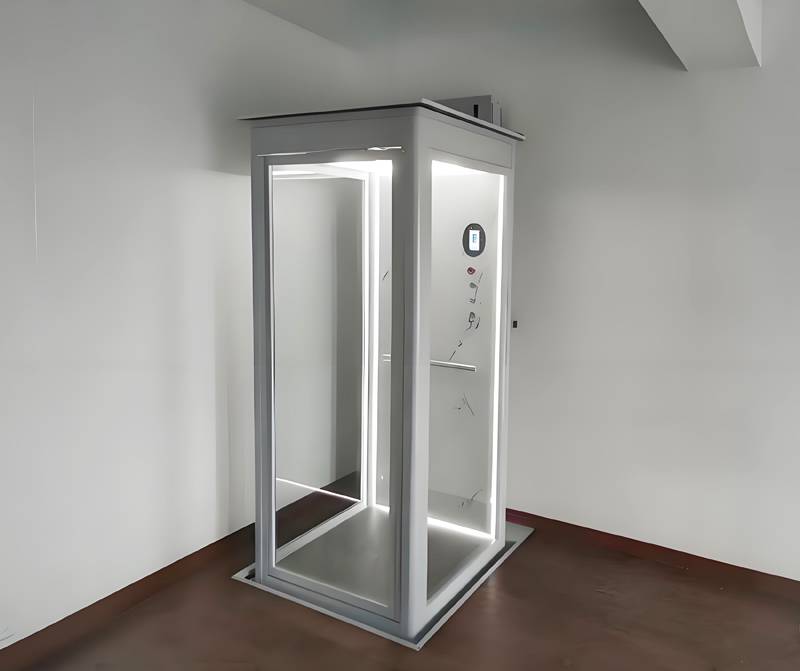
Here’s what really makes a cost effective home elevator for your home:
1. Minimal structural modifications (“Pitless advantage”)
This is the key factor for install an affordable elevator.
● Cost Driver: Traditional traction elevators require digging a pit 4 feet deep, breaking up the existing concrete floor, and pouring a new foundation—all of which entail significant costs.
● Cost-Effective Solution: Pitless (or non-pit) technology.
Choose a pitless model can save you thousands of dollars in labor, materials, and structural engineering costs.
2. Shaftless Design (No Construction Required)
Building elevator shaft in an existing home can cost more than the elevator itself,and it will also take up more space in the home.
● Cost-effective solution: Shaftless elevators.
These elevators run along self-supporting tracks and not need enclosed machine room or shaft, allowing them to be installed in house corners, stairwell voids, or closet spaces without extensive wall modifications.
3. Simplified Drive Systems
The elevator’s drive system determines its price and ongoing maintenance costs.
● Hydraulic Drive Elevators: For normal residential house, this is typically the most cost-effective, safe and reliable option. Compared to traditional screw or traction systems, hydraulic elevators have less fault parts and not need pit or shaft, resulting in lower installation costs and less maintenance cost.
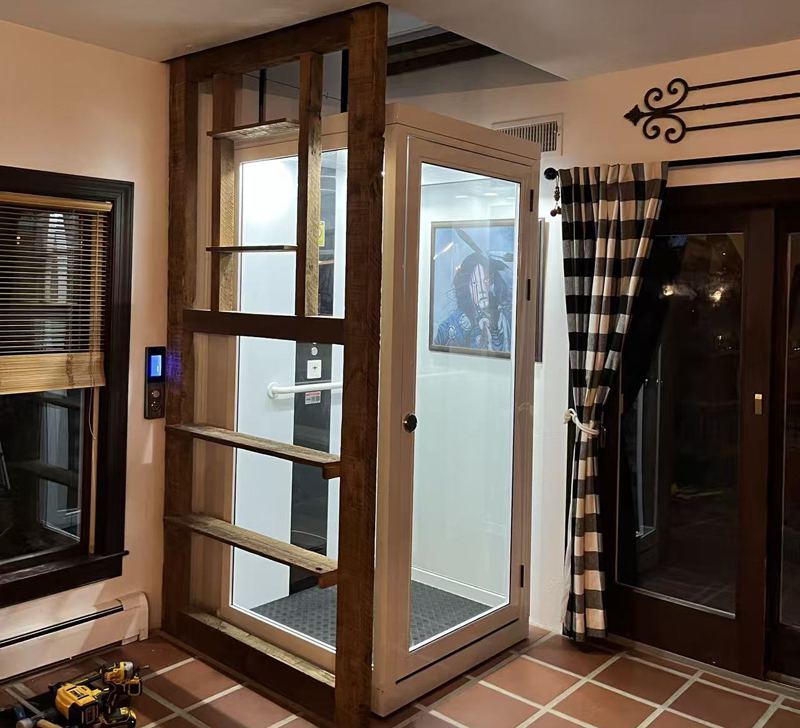
● Avoid Over-Customization: Choosing a standard-sized elevator with 1 to 2 stops and manual swing doors can significantly reduce manufacturing costs.
4. Choose Standard Factory Kits.
Customization is a luxury. Every time you request custom cabin finishes, or specific colors, the price goes up.
● Cost-Effective Solutions: Choose the manufacturer’s “base standard models.” Manufacturers offer models in standard sizes (e.g., 37 × 37 inches). Since these elevators all in standard parameter, they are much cheaper than custom models.
5. Quick Installation.
Labor and logistics are hidden costs.
● Modular Assembly: Modern home elevators are adopting a ‘modular’ design—they consist of pre-assembled components that can be moved through standard doorways. This eliminates the need for cranes or the demolition of load-bearing walls, thereby reducing installation costs.
Our affordable elevator was designed and built in easy-installed module, normal skilled worker can finished installation within 2-3 days. If you are a handyman, you can do it by yourself instead of hiring a installer. Cut down the total budget range to $5,000-$10,000.
Watch The Affordable Home Elevator Feedback Video From our Customer
What Should an Affordable Home Elevator Have?
- A silent motor for indoor home use.
- Safety sensor on the cabin door, elevator can’t moves if the doot not closed.
- Safety pan under the platform, elevator stops working when the safety pay touched any berrier under it.
- Fault voice alert.
- Maximum height limit switch for additional safety redundancy.
- A safety gate/door on second floor for prevent dropping. Gate/door can’t opened if the platform not arrive.
- A extra battery backup for emergency lowering if power failure.
- A descend valve for manual lowering.
Checklist for a Affordable Project:
|
Feature |
Expensive Choice |
Affordable Choice |
|
Shaft |
Custom concrete/drywall shaft |
Shaftless or pre-fab metal tower |
|
Foundation |
4 feet deep pit |
Pitless installation |
|
Doors |
Automatic sliding door |
Manual swing door |
|
Customization |
Customized cabin size |
Manufacturer’s standard size |
|
Drive |
High-speed luxury traction |
Reliable hydraulic-drive |
The “Hidden” Rules of Affordability.
An affordable elevator is one that neither depreciates the value of your home nor exceeds your budget due to hidden maintenance costs.
If you want to get the best price, request quotes from three different suppliers and ask explicitly: “What is the total cost, including all site preparation, electrical work, and installation fees?”
Never accept a quote for the “equipment” alone.
Interested in an affordable home elevator? Contact us for a details quote.