
Retrofitting a Small Elevator into an Old House: 2026 Complete Guide
Retrofitting a small elevator in an older house has become increasingly common. With the rise of compact home elevators, homeowners can now carry out retrofitting installations even in the most confined spaces.
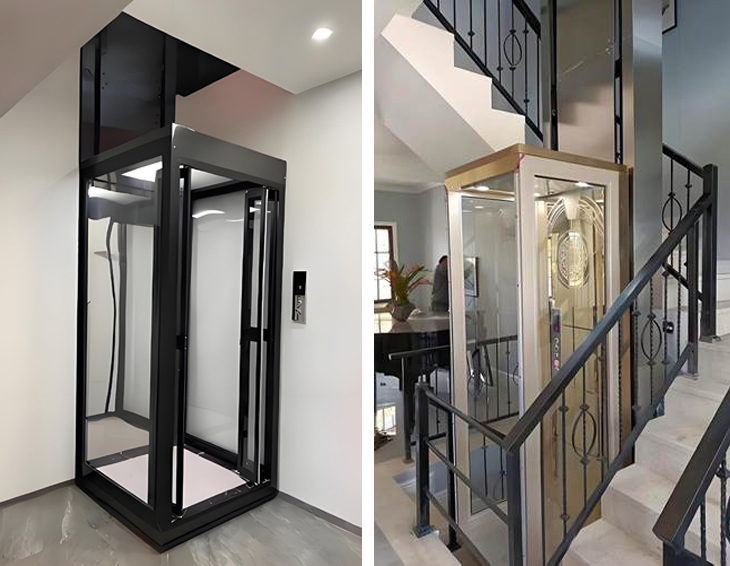
When retrofitting a elevator into an existing older building, the following factors must be considered.
1. Find suitable location:
In older properties, the following are the three most common locations for retrofitting:
● Built-in cupboards: The most cost-effective method. By aligning cupboards across multiple floors, a natural lift shaft can be formed without the need for extensive structural demolition or alterations.
● Centre of the stairwell: If you have a spacious spiral staircase, the central void (i.e. the ‘centre of the stairwell’) is also an ideal location for installing an elevator.
● Room corners: This requires cutting through the floor in a room corner so that the elevator can pass through to reach higher floors.
2. Choosing the best suitable model:
Shaftless, machine-room-less and pitless elevator.
This type of elevator minimises structural alteration costs, maximises space saving and reduces the overall budget.
3. Installation requirements for older properties:
The following issues must be resolved prior to installation:
- Electrical requires: Most residential elevators require a dedicated 220V circuit. Electricity max 14 Amps, please make sure your house has a enough capacity power line and circult breaker.
- Headroom Overhead Space requires: Older attics or top-floor rooms may has a sloping ceilings. Please ensure the model you select meets the headroom requirements. Generally, a minimum of 7 feet is required.
Steps for Retrofitting:
● Structural Assessment: Inspect and assess the load-bearing capacity of the floor slabs.
● Permitting: Check if you need structural alteration permit and installation permit.
● Model Selection: Choose a pitless and shaftless system.
● On-site Survey: choose installation location and measure the available space.
● Selecting a Supplier: Choose a supplier with extensive manufacturing and installation experience; request installation manuals; hire installers or install it yourself. Some brands for your reference: Stiltze, Bruno, Skystair Lift
● On-site Installation: Assemble the lift car, secure the rails, connect the electrical wiring, and complete assembly and commissioning.
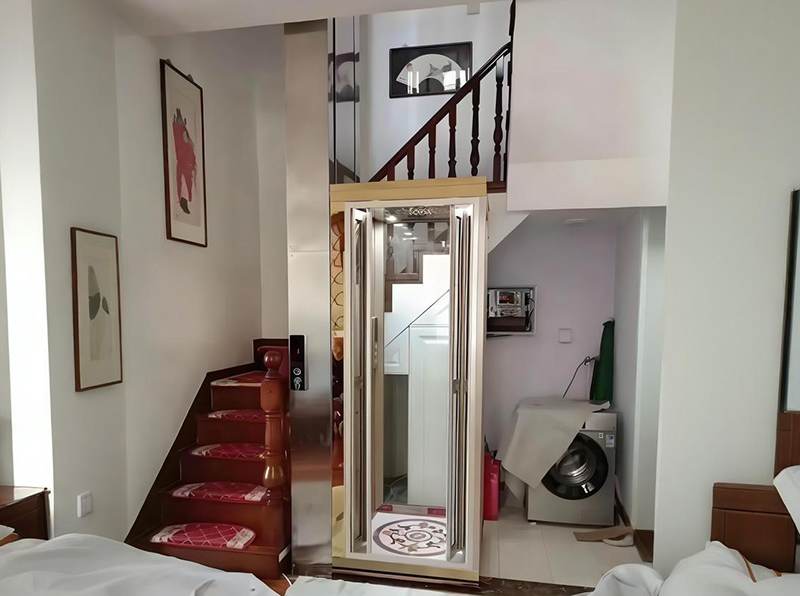
Costs
The price range for the most economical elevator is $5,000–$10,000.
The price range for luxury lifts is $15,000–$25,000.
Interested in retrofitting a small elevator in your house below $10k ? Contact us for a details quote!