13 Jul 2026

Skystair Smallest Footprint Home Elevator For Your House.

If you have a tight space, want a modern elevator for your home, and are looking to keep your total budget under $15,000, the Skystair Smallest Footprint Home Elevator has rapidly growing as one of the most cost-effective, shaftless solutions in the U.S. market.
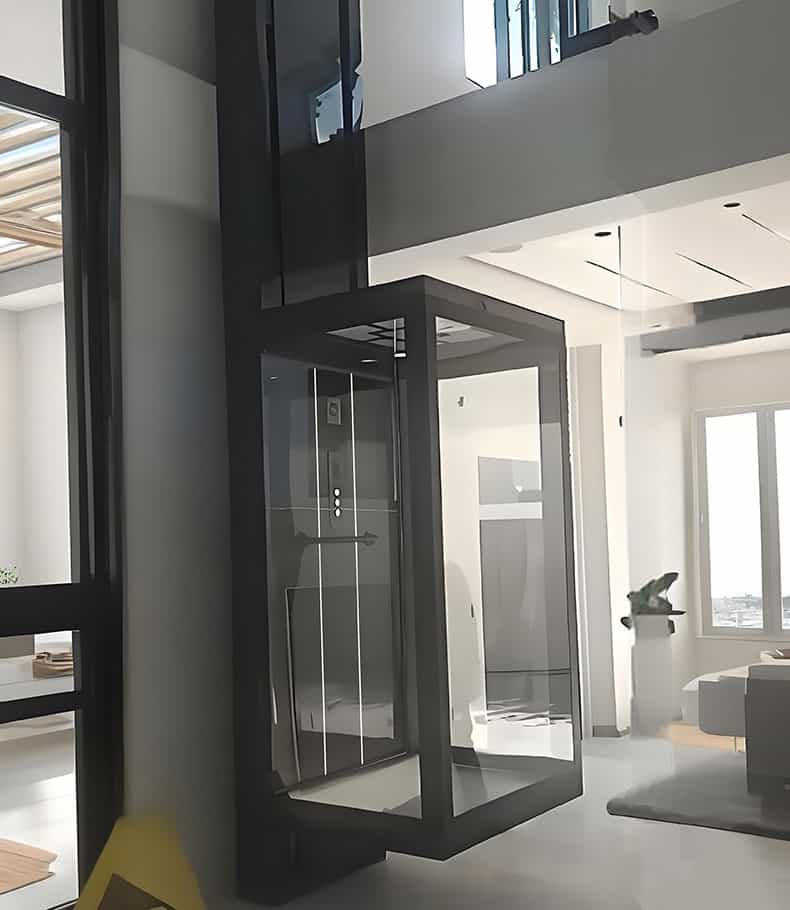
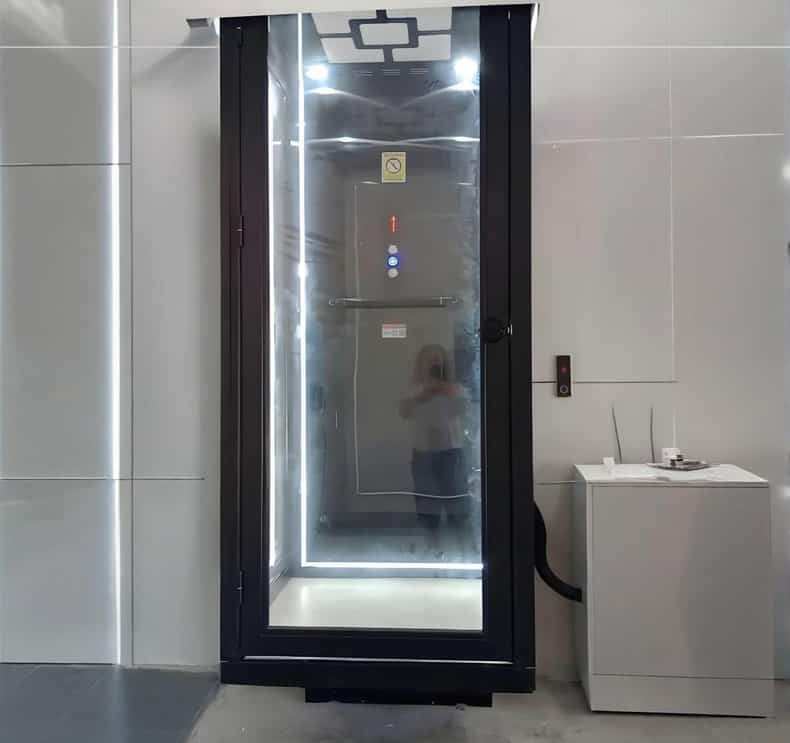
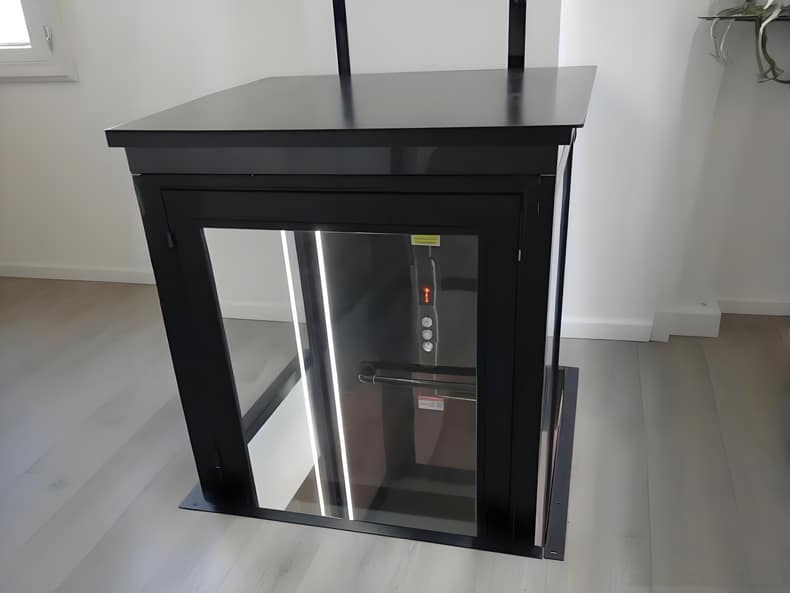
A black small home elevator installed inside a modern house.

But how small is it really, and can it actually fit your home’s layout? Let’s check the following technical details:

1. What Makes the Skystair “Smallest Footprint” Unique?

Traditional residential elevators require a dedicated, enclosed hoistway and a deep pit dug into your concrete foundation. Skystair completely rewrites this blueprint with its shaftless, pitless, and machine-room-less (MRL) design.

  • Ultra-Compact Footprint: It requires a minimum installation floor space of just 31.5″ × 39.4″ (approx. 80 cm x 100 cm). That means it occupies less than 9 square feet of total floor area—significantly less space than a traditional spiral staircase.
  • The “Pitless” Advantage: It sits directly on top of your existing flooring (hardwood, tile, or concrete). No messy foundation excavation required.
  • Modular “IKEA-like” Setup: The cab using a lightweight aluminum alloy structure and transparent tempered safety glass, it can often be assembled by skilled local handymen or contractors within 2–3 days, dramatically cutting down on installation labor costs.

2. Technical Specifications at a Glance

When choosing a compact home lift, data matters. Here is a breakdown of what the Skystair single-person elevator delivers:

Feature

Specification / Requirement

Why It Matters for U.S. Homes

Minimum Footprint

~31.5″ × 39.4″ (80 × 100 cm)

Fits perfectly into tight layouts without sacrificing room space.

Weight Capacity

660 lbs – 880 lbs (300-400 kg)

Easily carries one person plus heavy luggage or groceries.

Travel Height

Up to 4 floors max (1–8 meters)

Ideal for multi-story townhomes or 2-story lofts.

Operational Sound

~50 dB

Comparable to a quiet indoor conversation; won’t disrupt the household.

Power Requirements

Standard local AC (220V / 110V)

Plugs right into your home’s existing electrical infrastructure.

Headroom Required

≥ 6.5 feet (2000 mm)

Fits standard American ceiling heights easily.

a black home elevator cabin with lights on the top ceiling

3. Best Placements for a Mini Home Elevator

Thanks to its transparent aesthetic and tiny footprint, you don’t need to hide this lift behind a drywall shaft. According to home renovation experts, the three best spots to retroactively install a Skystair elevator include:

1.Mid-Staircase Void: The most popular choice. If your staircase wraps around a central open well, this elevator can slide right into that empty space.

2.Bedroom Corner: Because the cab uses clear tempered glass, putting it in the corner of a master bedroom or living room still give you an open, airy feel space.

3.Closet Conversion: Stacked walk-in closets on the first and second floors can easily be converted by cutting a matching floor opening to allow the vertical guide rails to pass through.

Expert Installation Note: 

Before ordering, a contractor simply needs to cut a structural floor opening (typically requiring at least 34.5″ × 41″ to comfortably clear the moving mechanism) and reinforce the edges with support beams.
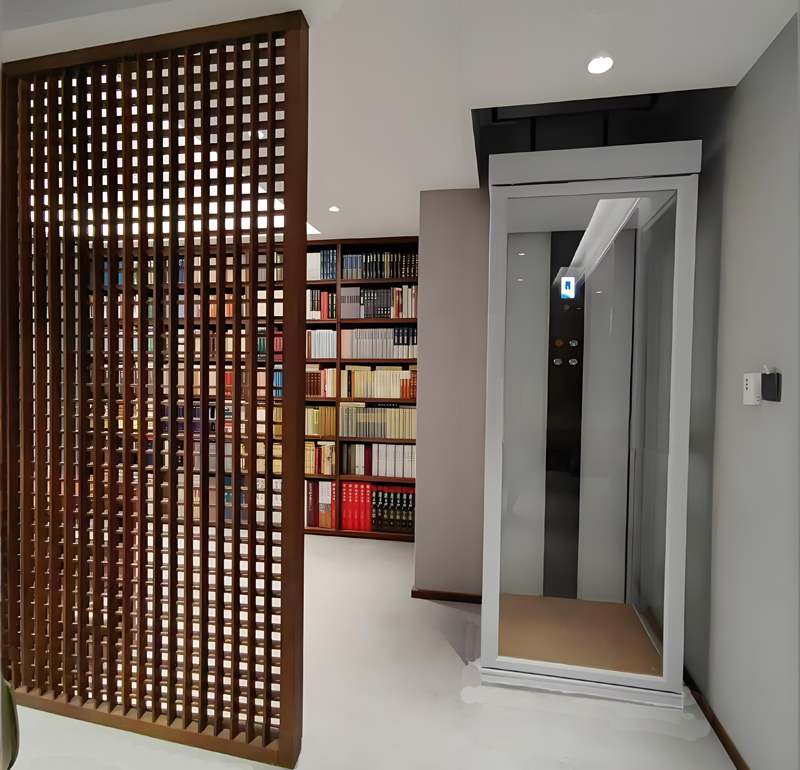
a simple white home elevator installed in a modern house

4. Built-In Safety Features You Can Trust

Small size doesn’t mean compromised safety. The Skystair system equipped several safety mechanisms:

  • Safety Pan Sensor: A pressure-sensitive sensor sits under the elevator platform. If a pet or an object is underneath the lift as it descends, it stops instantly.
  • Battery Back-Up System: In the event of a sudden power outage, the built-in emergency battery can safely lowers the platform to the ground floor and you are never trapped.
  • Mechanical Safety Gear: Prevents the lift cabin from dropping even in the highly unlikely scenario of a mechanical chain or rope failure.
  • Interlocking between Car Doors and Landing Doors: The elevator can’t moves unless the car doors and landing doors are fully closed and locked. Also, the landing doors on a particular floor cannot be opened unless the car is actually stopped at that floor.

Check How Customer say this lift:

The Verdict: Is It Worth It?


If you are looking to retrofit your home without spending $40,000+ on a big construction project, the Skystair Smallest Footprint Home Elevator is an affordable solution. It eliminates the need for expensive shafts and pits, installs in 2-3 days, and preserves your home’s natural light thanks to its glass paneling.


  Interested install a small home elevator below $10k Contact us for a details quote!  

(We will reply you within 24 hours)

Share this
22 Jun 2026

How Much Does a Home Elevator Cost to Install–Affordable Guide.

If you are searching the cost of installing a affordable home elevator in your house, you may have noticed that quotes online vary considerably. 

Let’s take a look at the figures.

In 2026, the average cost of installing a standard 2-stop home elevator in the US ranges from US$10,000 to US$50,000. 

Homeowners on less budget can also find highly reliable and affordable elevator options below US$10,000.

a black shaftless home elevator installed inside a modern house in US

This guide will provide a detailed analysis of the actual price, hidden installation costs, and the most cost-effective elevator solutions.

Cost Guide of Install a home elevator:

Elevator type

Average cost

   (include installation )

 Min Space        Requirements

Shaftless Elevator

       $10,000 – $15,000

     31 x 39 inches

Pneumatic Vacuum Elevator

       $35,000–$50,000+

     35×35 inches.

Traction Elevator

       $25,000 – $45,000

     47×55 inches.

The ‘Hidden’ Costs of Home Elevator Installation. 

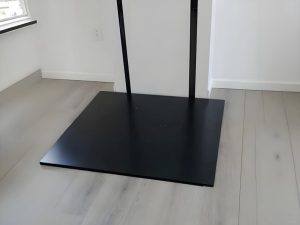
a safety lid to cover the elevator hole when the cab on lower floorWhen you receive a quote from elevator manufacturer—such as Stiltz, Savaria or Skystair—the listed price usually covers only the equipment and basic installation costs. To avoid additional charges, you must set extra amount in your budget for site preparation.

Based on 2026 contractor data, the following are typical site preparation costs:

Shaft construction (if required): Building a new timber or plasterboard elevator shaft within an existing home costs between US$8,000 and US$20,000. For new-build homes, the cost is lower, at US$5,000 to US$12,000.

● Electrical line upgrades (if required): Most domestic elevators require a dedicated 220V circuit. The cost of hiring an electrician to upgrade the fuse box or rewire the power line about $1,500 and $5,000.

The most affordable solution: Install a shaftless through the floor home elevator.

a black home elevator cabin with lights on the top ceiling

Key benefits:

1. Price advantage: Total costs range from $10,000 to $15,000, including the cost of unit and on-site installation.

2. The elevator requires no machine room, no plasterboard shaft and no excavation of a pit; it can be installed directly onto the existing floor, saving 90% on traditional construction and plasterboard costs.

3. Low energy consumption: The shaftless elevator operates at a maximum current of 14 Amps with a motor power of 2.2 kW. It can be plugged directly into a standard 220V domestic socket, consuming power comparable to household appliances such as air conditioning, and requires no separate wiring.

4. Simple design and quick installation:Normal skilled workers can complete the installation within 2–3 days, significantly reducing labour costs. If you are reasonably handy, you can even finish the installation by yourself.

5. Minimal installation space: A space about 31 x 39 inches is enough for install a basic home elevator.

6. Simpler ongoing maintenance: No complex professional maintenance is required; house owners can carry out basic maintenance themselves by following the maintenance checklist.

 Check How Shaftless Home Elevator works:

  Interested install an affordable home elevator below $10k Contact us for a details quote!  


(We will reply you within 24 hours)

Share this
10 Jan 2026

Introducing a Skystair home elevator for small space

In modern homes, install a compact residential elevator is a popular choice. These are commonly referred as”Machine Room-Less Elevator / MRL Elevator”

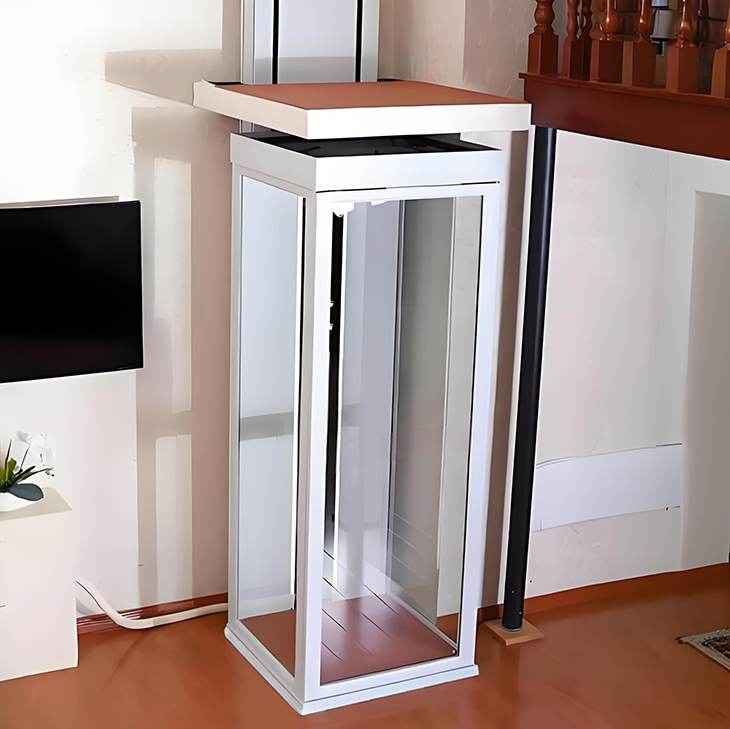
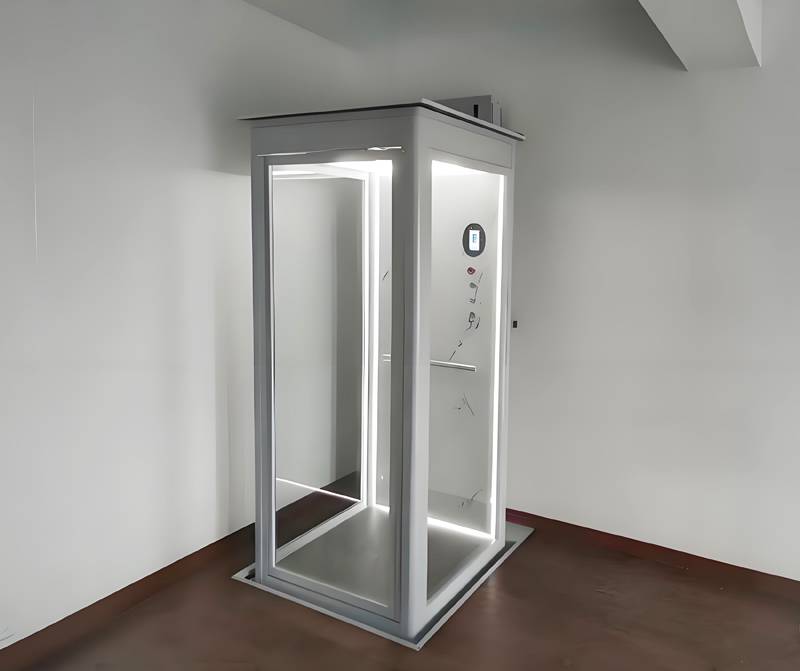
a white home elevator lift installed inside a modern room with wooden floor.

Below is a recommended Skystair residential home elevator specifically designed for small spaces, for your consideration.

  1. Minimum installation space: Approximately 31.5 inches x 39.4 inches;
  2. Load capacity: Typically 660 lbs;
  3. Installation Locations:
  • Mid-staircase: The most common installation spot, requiring precise measurement of the clear space at the staircase turn.
  • Wall-mounted corner: Utilizes a room corner or the end of a hallway.
  • Existing shaft: For retrofitting older buildings, installation within a narrow existing shaft is possible. Professional measurement is needed.

Features:

Pit requirement: No pit required. No machine room. No enclosed brick shaft. 

Headroom requirement: ≥ 6.5 feet.

Advantages: Lower cost, simple installation/maintenance, smooth operation, extremely low noise ( 50 dB ).

a small home elevator installed inside a modern house in US

Parameter Explanation:

  • Minimum Installation Space: Space required to accommodate elevator components such as guide rails, brackets, and car. Equivalent to the reserved structural floor opening dimensions.

Example: For an elevator with a cabin interior of 29 inches x 26 inches, the required floor opening in your home should be at least 34.5 inches x 41.7 inches.

  • Pit Depth: The depth required to excavate below ground level. Hydraulic driving elevators may not require a pit.
  • Overhead space: The distance from the car top to the shaft top when the elevator stops at the highest floor. Must meet the minimum height specified by the elevator manufacturer to ensure safe maintenance space.

Typically requires ≥ 80 inches ( 2030mm ).

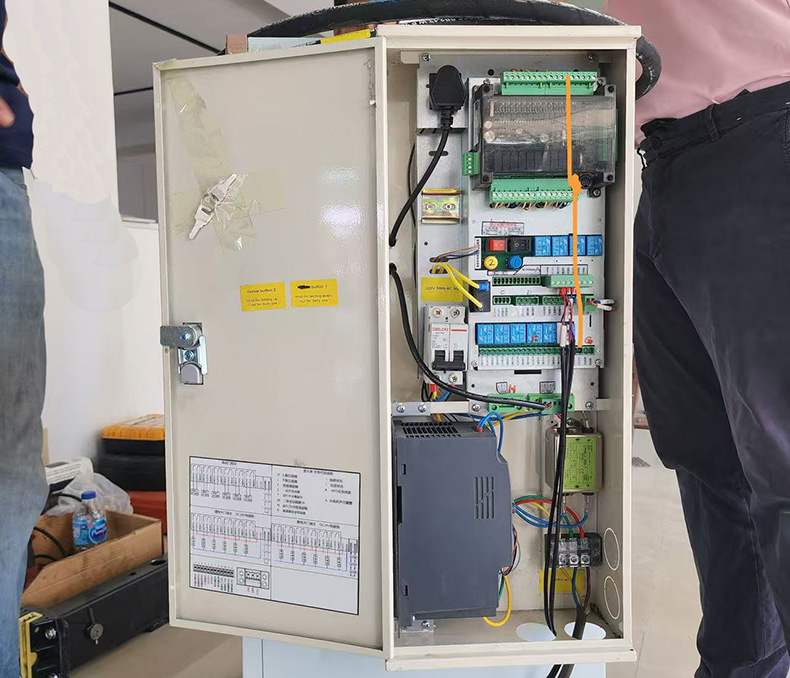
  • Machine Room: Above type elevator is machine-room-less designs. Control cabinets can usually be installed beside the elevator or in nearby spaces (e.g., under stairs, storage rooms). Confirm the location with the supplier in advance.

home elevator control cabinet

  • Power Source: Local AC electricity, such as 220v/240v, 50/60hz, single phase.  Max 14Amps current.
  • Price Cost: Total costs range from $10,000 to $15,000, including the cost of unit and on-site installation.  
  • Handyman benefits: This elevator is preassemble in factory and finished all function test, then break down into kitset.  You can make installation by yourself, to save lots of installation charges.   

Hope this information helps you build a perfect elevator!

Check How The Small Home Elevator works:

  Interested install an mini home elevator below $10k Contact us for a details quote!  

(We will reply you within 24 hours)

Share this
02 Dec 2025

How much does a shaftless home elevator cost?

How much does a shaftless home elevator cost? — A practical, friendly guide

If you’re considering adding a shaftless home elevator (also called a home lift or shaft-less residential lift), cost is one of the first — and trickiest — questions. Unlike full-shaft traction or hydraulic elevators, shaftless lifts are engineered to be compact, easier to install, and often less expensive. Below is a clear, searchable explanation of typical price ranges, what drives cost, code and permit considerations, and realistic budgeting advice — with links to reputable government, university, and industry sources.

A shaftless home elevator installed in a 2 floor US townhouse.


Quick answer (short summary)

  •   Typical price range for a shaftless residential elevator: roughly $5,000 to $15,000 installed for mostly affordable single-floor residential shaftless models;   premium or customized units can be higher. This depends on platform size, load capacity, travelling height, final finishes, and site work. 


What is a shaftless home elevator — and why is it cheaper?

A shaftless elevator (also called a home lift) is a compact vertical lift designed for homes that does not require a full hoist or framed hoistway. Many shaftless designs mount to a mast or guide system or use a small structural enclosure that passes through a single floor opening. Because they avoid full shaft construction and large mechanical rooms, they generally have lower labor and construction costs than traditional elevators — especially when serving only two floors. Manufacturer pricing and buyer guides reflect this lower installed cost compared with full-shaft passenger elevators. 


Typical cost breakdown

When you budget for a shaftless home elevator, consider these components:

  1.   Unit price (equipment):  Some affordable elevator basic price can be $5,000-$10,000.   

  2. $20,000–$30,000 for many shaftless/home lift models (standard finishes, single-floor travel). Some well-known manufacturers list their compact models in the low-to-mid-$20k range. Source: stiltzlifts.com

  3. Installation & labor: $1,000–$2,000 depending on site complexity (cutting floor openings, reinforcing landing, routing electrical, finish carpentry).

  4. Optional extras: Custom cab finishes, automatic doors, remote diagnostics, or compliance upgrades (e.g., larger cabs for wheelchair access) add cost — sometimes significantly.

a black shaftless home elevator installed inside a modern house in US

Putting it together: many homeowners report total installed costs for shaftless home lifts in the neighborhood of $15k–$35k, while higher-end or accessibility-sized options can approach $40k–$60k. Industry price surveys and consumer guides echo this range. 

Watch The Shaftless Home Elevator Feedback Video From  Customer

Examples from manufacturers and industry

  • Stiltz — a leading shaftless/home lift manufacturer, positions compact residential lifts often in the low-to-mid $20k range for typical two-floor installs (actual cost varies by model and site). Manufacturer pages and dealer quotes are useful to get an accurate, location-specific number. 

  • Skystair lift — a developing manufacturers publish ranges for home lifts; some two-floor home lift solutions are commonly quoted in $7,000 to $10,000 range in the United States. Always ask local dealers for an installed quote. Skystair Global.

(Manufacturer pages are excellent for exact dimensions, capacities, and required clearances — essential inputs for a reliable install quote.)


How to get an accurate quote (best practice)

  1. Decide the use: Is it for ambulatory users only, or must it be wheelchair accessible? Wheelchair-capable lifts are pricier.

  2. Gather site info: Travel distance, floor-opening size, structural access, and available power all matter.

  3. Request multiple dealer quotes: Ask at least 2–3 certified dealers (manufacturer dealers if possible) and insist the quote itemizes unit price, installation, permits, and extras.

  4. Ask about warranties and maintenance: Lifetime cost includes service contracts and periodic inspections.

  5. Ask for references and sample installs: photos or local installs let you see finished work and typical hidden costs.

a white shaftless home elevator installed inside a 3 floor US house


Bottom line

Shaftless residential elevators are one of the most cost-effective ways to add vertical access in a two-story home. Expect roughly $7,000–$40,000 installed for the typical shaftless model, but get local quotes — final price depends on capacity, finishes, required structural work, permits, and whether the unit must meet accessibility standards. For reliable planning, consult manufacturer spec sheets and your local building department, then get at least two written installed quotes.

  Interested in a shaftless home elevator below $10k ?  Contact us for a details quote!  
(We will reply you within 24 hours)

Share this

© 2017 skyliftcc. All rights reserved.

Click Me