15 Jun 2026

Through-the-Floor Home Elevator–Most Affordable Option for U.S. Houses

Unlike standard lifts enclosed within a shaft, through-the-floor elevator travelling up and down through a small opening cut into the ceiling or floor.
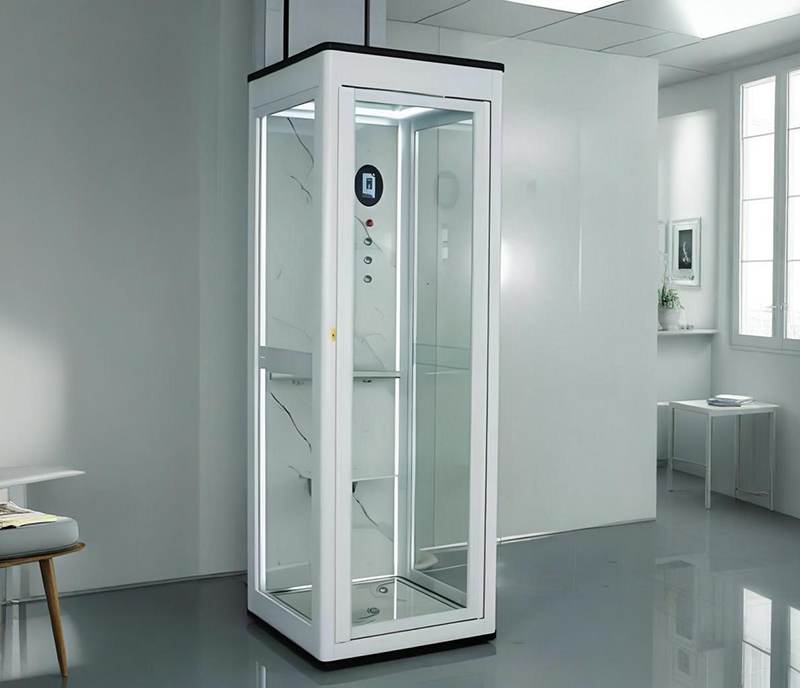
A shaftless home lift installed in a 2 floor modern house.

Ground-floor appearance: When the elevator on upper floor, only the vertical guide rails are visible on the wall. The floor space below is clear.
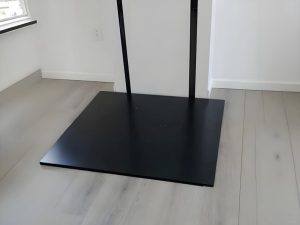
● Upper-floor appearance: When the elevator at lower level, 

a safety cover plate naturally covers the opening on the second floor;

it is load-bearing and safety to walk on.

Safety tip: The system equipped built-in safety switches at both the top and bottom. If a pet, child or other obstacle is detected below whilst the cab is descending, the sensors will detect the obstruction and immediately stop the elevator.

Why is it the most cost-effective option for renovations?

1. Shaftless Design.

Traditional elevators require the construction of a enclosed shaft (hoistway) and excavation of a pit in the foundation, with contractor costs alone easily adding up to $10,000 to $20,000. Shaftless elevators require neither a pit nor a shaft. Local contractors simply need to cut a hole in the ceiling joists and reinforce the edges. 

2. Minimal Electrical Modifications

Most through-the-floor models can be powered by standard domestic power sockets. They simply plug into a standard 220V/230V socket, with a maximum operating current of 14 Amps, eliminating the need for expensive commercial-grade distribution boards and circuit breakers.

3. Rapid Installation Reduces Labour Costs

Thanks to the easy installed modular design,normal skilled worker can complete the installation within 2 to 3 days. If you are a handy man, you can even finish installation by yourself. Traditional models often require several weeks by a professional elevator contractor..

Check How Through-the-Floor Home Elevator works:

2026 Cost Comparison: Through-the-Floor vs. Traditional Lifts

To give you a realistic picture of the current US market, here is a comparison of the average total installation costs for different elevator solutions:

Elevator type

Average cost ( installed )

Min Space Requirements

         Best For

Through-the-Floor Elevator

       $10,000 – $15,000

 31 x 39 inches

Tight spaces, 2-3 floor travel.

Pneumatic Vacuum Elevator

       $35,000–$50,000+

 35×35 inches.

Retrofit exist homes quickly

Traction Elevator

       $25,000 – $45,000

 47×55 inches.

 Luxury modern house

Note: Popular brands of through-the-floor elevator on the US market include Stiltz (Duo/Trio series) , Skystair Elevator and Savaria Telecab.

The cost of the basic unit is approximately $10,000 to $30,000; this price does not include local labour costs or licensing fees.
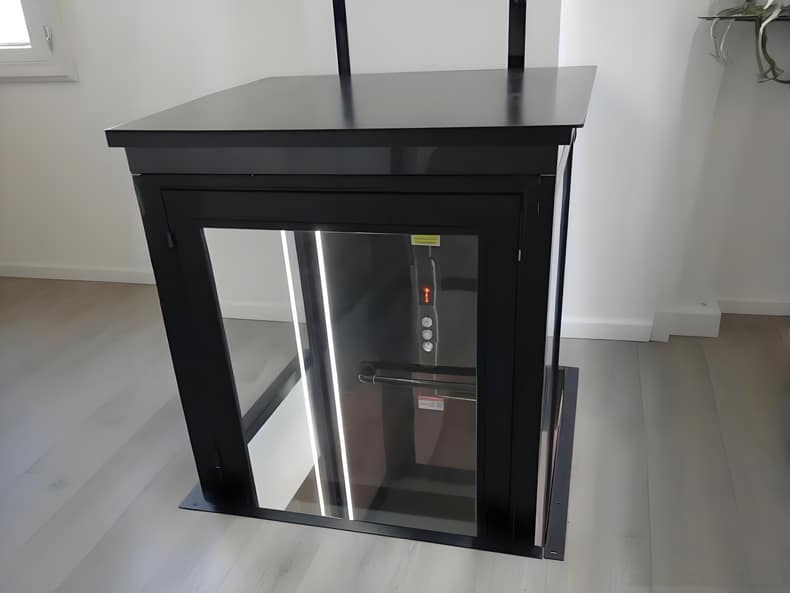
a black shaftless home elevator installed inside a modern house in US

Advantages for Through-the-Floor Home Elevator.

Cost-effective: Total costs range from approximately $20,000 to $30,000,  some budget friendly elevator even available for $10,000 to $15,000.

Small footprint: Requires a minimum space of just 31.5 x 39 inches.

Extremely low noise: Operating noise levels are approximately 50–60 dB, same as our normal talking.

Quick installation: Installation can be completed in 2–3 days.

Increase property value: Boosts the resale value of your home and attracts a large number of family seeking barrier-free accommodations.

Relocatable: If you sell your house, a shaftless elevator can actually be dismantled and relocated to your next property.

Final conclusion: Is it right for your home?

If your home is a 2 or 3 storey structure with limited space, and you wish to avoid complex and costly structural alterations, 

then a shaftless elevator is undoubtedly the most cost-effective and powerful option available in the US today.

  Interested install a shaftless home elevator below $10k Contact us for a details quote!  

(We will reply you within 24 hours)

Share this
02 Dec 2025

How much does a shaftless home elevator cost?

How much does a shaftless home elevator cost? — A practical, friendly guide

If you’re considering adding a shaftless home elevator (also called a home lift or shaft-less residential lift), cost is one of the first — and trickiest — questions. Unlike full-shaft traction or hydraulic elevators, shaftless lifts are engineered to be compact, easier to install, and often less expensive. Below is a clear, searchable explanation of typical price ranges, what drives cost, code and permit considerations, and realistic budgeting advice — with links to reputable government, university, and industry sources.

A shaftless home elevator installed in a 2 floor US townhouse.


Quick answer (short summary)

  •   Typical price range for a shaftless residential elevator: roughly $5,000 to $15,000 installed for mostly affordable single-floor residential shaftless models;   premium or customized units can be higher. This depends on platform size, load capacity, travelling height, final finishes, and site work. 


What is a shaftless home elevator — and why is it cheaper?

A shaftless elevator (also called a home lift) is a compact vertical lift designed for homes that does not require a full hoist or framed hoistway. Many shaftless designs mount to a mast or guide system or use a small structural enclosure that passes through a single floor opening. Because they avoid full shaft construction and large mechanical rooms, they generally have lower labor and construction costs than traditional elevators — especially when serving only two floors. Manufacturer pricing and buyer guides reflect this lower installed cost compared with full-shaft passenger elevators. 


Typical cost breakdown

When you budget for a shaftless home elevator, consider these components:

  1.   Unit price (equipment):  Some affordable elevator basic price can be $5,000-$10,000.   

  2. $20,000–$30,000 for many shaftless/home lift models (standard finishes, single-floor travel). Some well-known manufacturers list their compact models in the low-to-mid-$20k range. Source: stiltzlifts.com

  3. Installation & labor: $1,000–$2,000 depending on site complexity (cutting floor openings, reinforcing landing, routing electrical, finish carpentry).

  4. Permits, inspections & fees: Permits and inspections vary by jurisdiction; plan to pay permit fees and any plan-review charges required by your building department. (See local building/elevator permit pages for specifics.) U.S. Access Board — Elevators & Platform Lifts.

  5. Optional extras: Custom cab finishes, automatic doors, remote diagnostics, or compliance upgrades (e.g., larger cabs for wheelchair access) add cost — sometimes significantly.

a black shaftless home elevator installed inside a modern house in US

Putting it together: many homeowners report total installed costs for shaftless home lifts in the neighborhood of $15k–$35k, while higher-end or accessibility-sized options can approach $40k–$60k. Industry price surveys and consumer guides echo this range. 

Watch The Shaftless Home Elevator Feedback Video From  Customer

Examples from manufacturers and industry

  • Stiltz — a leading shaftless/home lift manufacturer, positions compact residential lifts often in the low-to-mid $20k range for typical two-floor installs (actual cost varies by model and site). Manufacturer pages and dealer quotes are useful to get an accurate, location-specific number. 

  • Skystair — a developing manufacturers publish ranges for home lifts; some two-floor home lift solutions are commonly quoted in $5,000 to $10,000 range in the United States. Always ask local dealers for an installed quote. Skystair Global.

(Manufacturer pages are excellent for exact dimensions, capacities, and required clearances — essential inputs for a reliable install quote.)


Codes, accessibility, and safety — don’t skip this step

Shaftless lifts for private residences are subject to safety rules and local building/elevator codes. If you need a lift to meet accessibility requirements (wheelchair access), the unit and install will often need to meet stricter standards (larger cab, higher rated capacity), which increases cost. The U.S. Access Board and federal guidance outline how private residence lifts fit into accessibility and safety frameworks — a key reference when designing or specifying a lift. access-board.gov

Additionally, many jurisdictions require elevator permits, plan review, and inspections — all of which add cost and time. Check your city or state elevator/permit pages before committing. dbs.lacity.gov


How to get an accurate quote (best practice)

  1. Decide the use: Is it for ambulatory users only, or must it be wheelchair accessible? Wheelchair-capable lifts are pricier.

  2. Gather site info: Travel distance, floor-opening size, structural access, and available power all matter.

  3. Request multiple dealer quotes: Ask at least 2–3 certified dealers (manufacturer dealers if possible) and insist the quote itemizes unit price, installation, permits, and extras.

  4. Ask about warranties and maintenance: Lifetime cost includes service contracts and periodic inspections.

  5. Ask for references and sample installs: photos or local installs let you see finished work and typical hidden costs.

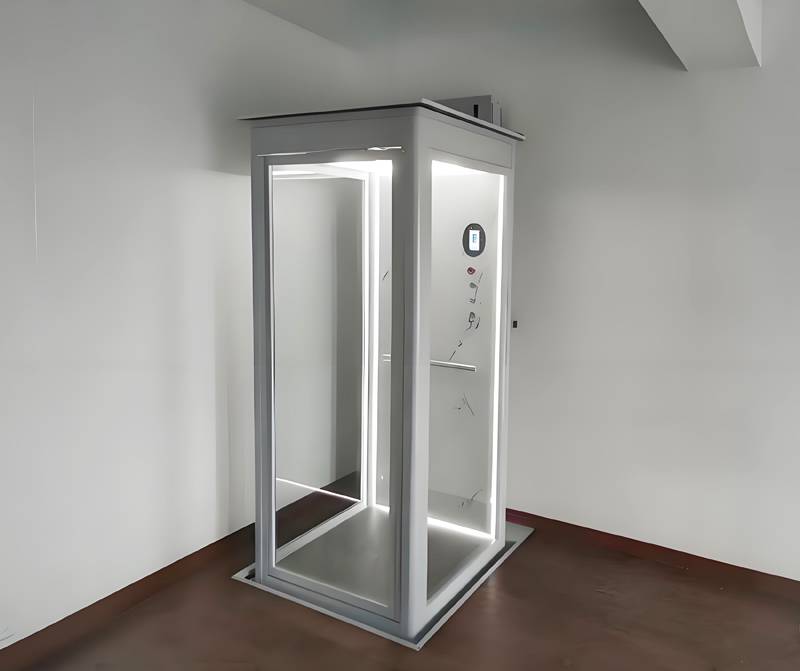
a white shaftless home elevator installed inside a 3 floor US house


Bottom line

Shaftless residential elevators are one of the most cost-effective ways to add vertical access in a two-story home. Expect roughly $5,000–$40,000 installed for the typical shaftless model, but get local quotes — final price depends on capacity, finishes, required structural work, permits, and whether the unit must meet accessibility standards. For reliable planning, consult manufacturer spec sheets and your local building department, then get at least two written installed quotes.

  Interested in a shaftless home elevator below $10k ?  Contact us for a details quote!  
(We will reply you within 24 hours)

Share this

© 2017 skyliftcc. All rights reserved.

Click Me